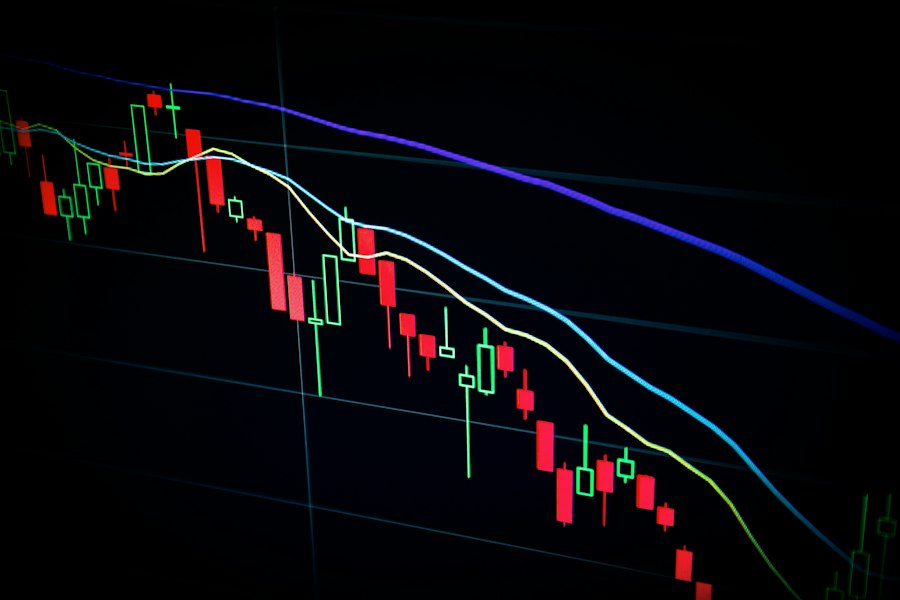
The Japanese yen carry trade is often described as borrowing cheaply in yen to buy higher-yielding assets, but that shorthand misses the most important feature: it is a leveraged bet on central bank divergence staying orderly. The trade earns small, repeatable income while the Bank of Japan keeps funding costs low and foreign central banks keep rates higher. It loses money abruptly when currency volatility rises, Japanese yields reprice, or investors are forced to cut leverage at the same time.
The yen’s role as the world’s preferred funding currency was not created by accident. Japan spent more than two decades with near-zero or negative short-term rates, persistent domestic savings surpluses, and institutional investors that exported capital into U.S. Treasuries, Australian bonds, Mexican government debt and global credit. Even after the Bank of Japan ended negative rates in March 2024, the policy rate was still only around zero to 0.1%, while the Federal Reserve’s target range sat at 5.25% to 5.50% and Mexico’s policy rate was 11.00%. That gap is the raw material of the carry trade.
How the yen carry trade actually works
At the simplest level, an investor borrows yen, converts the proceeds into a higher-yielding currency, and buys an asset with a positive interest-rate spread. A dollar-yen carry trade might involve shorting JPY funding and holding U.S. Treasury bills yielding above 5%. A higher-beta version could buy Mexican peso assets, Brazilian local debt, Indonesian government bonds, or even global equities financed with yen liabilities.
The expected return has three components: the interest-rate differential, the spot currency move, and the cost of funding or hedging. If an investor borrows yen at 0.25% and buys a dollar asset yielding 5.25%, the gross carry is roughly 500 basis points before transaction costs and leverage. If USD/JPY also rises from 150 to 157, the investor earns both the yield and the currency gain. If USD/JPY falls from 157 to 145, several years of carry can disappear in days.
Professional desks rarely execute the trade as a simple bank loan and spot conversion. They use FX forwards, cross-currency swaps, futures, options, and total-return swaps. The forward rate embeds the interest-rate differential through covered interest parity, so the carry is not a free lunch. In practice, investors are paid for assuming the risk that uncovered interest parity fails over the holding period and that the funding currency does not appreciate faster than the interest income earned.
Leverage is what turns a modest yield gap into a market-moving force. A 5% annualized spread is attractive, but a macro fund applying four times leverage can transform it into a 20% gross return target if volatility remains low. That is why yen carry tends to expand during periods of calm financial conditions, falling implied volatility and rising equity markets. The trade is less about Japan in isolation than about the global price of balance-sheet risk.
Why the yen remains the funding currency of choice
The yen’s carry appeal rests on more than low rates. Japan is a net external creditor, with a large positive net international investment position, meaning the country owns far more foreign assets than foreigners own Japanese assets. That creates a structural pool of outbound capital and makes yen funding deep, liquid and scalable. USD/JPY is one of the world’s most traded currency pairs, so large positions can be built with relatively low transaction costs.
The Bank of Japan also moved later than every other major central bank in the inflation cycle. The Federal Reserve, Bank of England and European Central Bank raised rates aggressively in 2022 and 2023, while Japan maintained yield curve control and negative short-term rates. The result was extreme policy divergence: by late 2023, U.S. two-year Treasury yields traded near 5% while Japanese two-year yields hovered close to zero. That divergence pushed USD/JPY toward levels last seen in the early 1990s.
Japan’s domestic investor base reinforced the move. Life insurers, pension funds and regional banks have long searched for yield abroad. When hedging costs rose sharply, many investors reduced currency hedges rather than abandon foreign bonds entirely. A Japanese investor buying U.S. fixed income on an unhedged basis becomes economically similar to a carry trader: exposed to foreign yields and vulnerable to yen appreciation.
There is also a behavioral dimension. The yen often weakens during risk-on environments because investors borrow it to buy higher-return assets. When global markets sell off, the yen can strengthen as those trades are closed. This gives the currency a safe-haven profile even though Japan’s own fiscal metrics are stretched, with gross public debt above 250% of GDP. The safe-haven behavior comes from position liquidation and repatriation mechanics, not from pristine sovereign balance sheets.
The carry is attractive, but the payoff is negatively skewed
The yen carry trade pays like selling insurance. Investors collect income in quiet markets, but the downside arrives in concentrated bursts. This negative skew is visible in historical episodes: the yen surged during the 1998 collapse of Long-Term Capital Management, rallied violently through the 2008 global financial crisis, strengthened after the 2011 Tohoku earthquake, and jumped during several volatility shocks when leveraged investors cut risk.
The key risk is that the yen can appreciate while the asset being purchased also falls. A fund long Mexican local bonds funded in yen faces two linked losses if global risk appetite deteriorates: MXN/JPY falls and local yields may rise. A fund long Nasdaq exposure funded in yen can suffer from a weaker equity market and a stronger yen at the same time. That correlation shift is what makes carry unwind events so damaging.
Option markets usually price this asymmetry. Yen call options, which protect against JPY appreciation, can become expensive when investors fear an unwind. The speed of spot moves matters more than the final level. A gradual decline in USD/JPY from 160 to 150 can be absorbed by carry income and risk management; a three-day drop can trigger stop-losses, margin calls and value-at-risk cuts before fundamentals have time to reassert themselves.
Positioning is another vulnerability. When speculative accounts are heavily short yen, the trade becomes self-referential. A modest catalyst forces short covering, which strengthens the yen, which forces more covering. CFTC futures data have repeatedly shown large leveraged-fund yen shorts during periods when USD/JPY traded near multi-decade highs. Futures are only a partial window because much of the trade sits in forwards, swaps and offshore balance sheets, but they provide a useful stress signal.
What can trigger a yen carry unwind
The first trigger is a Bank of Japan reaction function shift. The end of negative rates was symbolically important, but the real question is whether wage growth and services inflation allow the BOJ to lift rates further and reduce JGB purchases without destabilizing the bond market. Japan’s spring wage negotiations delivered the strongest pay increases in decades in 2024, giving policymakers more confidence that inflation was not purely imported. If markets price a terminal BOJ rate meaningfully above 0.5%, the funding advantage of the yen begins to narrow.
The second trigger is a Federal Reserve easing cycle. The yen carry trade is most powerful when U.S. rates are high and Japan remains anchored. If U.S. inflation falls and the Fed cuts rates while the BOJ tightens slowly, the two-year yield differential compresses. USD/JPY is highly sensitive to this front-end spread because carry traders fund short and mark positions to market daily. A 100-basis-point narrowing in the U.S.-Japan two-year differential can change the risk-reward calculation even before spot moves.
The third trigger is Ministry of Finance intervention. Japan spent more than ¥9 trillion across September and October 2022 to support the yen, and official data indicated another large intervention episode around late April and early May 2024 when USD/JPY traded near 160. Intervention does not reverse a currency trend alone, but it changes the distribution of intraday risk. Carry traders dislike environments where a profitable position can be hit by a three-yen move in minutes.
The fourth trigger is a global volatility shock. The yen carry trade is ultimately short volatility. A spike in the VIX, a credit event, a U.S. regional bank scare, a China growth shock, or a geopolitical escalation in the Middle East can force systematic funds and discretionary macro portfolios to reduce gross exposure. In that environment, investors do not ask which carry trades are fundamentally strongest; they sell what is liquid.
The fifth trigger is emerging-market stress. Yen-funded carry often migrates toward currencies with high nominal yields, including MXN, BRL, ZAR, TRY and selected Asian FX. The problem is that high-yielding currencies are not interchangeable. Mexico benefits from nearshoring and high real rates, while Turkey carries institutional credibility risk and South Africa faces electricity, fiscal and commodity-cycle constraints. A sell-off in one high-yield complex can contaminate broader carry baskets through risk limits and ETF flows.
How to read the warning signs
Investors should track five indicators rather than obsess over a single USD/JPY level. The first is the U.S.-Japan two-year yield spread, because it measures the forward carry incentive. The second is Japanese wage and services inflation, because those determine whether the BOJ can normalize without choking domestic demand. The third is one-month USD/JPY implied volatility; a sustained move higher reduces the attractiveness of leveraged carry even if spot is stable.
The fourth is cross-asset correlation. If the yen starts strengthening on days when U.S. equities fall and credit spreads widen, the market is moving from a carry regime into an unwind regime. The fifth is official language from Japanese authorities. Phrases such as “excessive moves” and “closely watching with a high sense of urgency” have historically preceded intervention risk, especially when yen weakness becomes politically salient through import prices and household purchasing power.
For portfolio construction, the lesson is not that yen carry should be avoided. It is that sizing and convexity matter. Investors can reduce tail risk by using options instead of spot leverage, diversifying funding currencies, avoiding overcrowded EM carry baskets, and pairing carry positions with assets that benefit from a volatility shock. The cheapest hedge is rarely available when it is most needed, so protection must be bought when the carry environment still looks benign.
The next phase: less free money, more discrimination
The golden era of one-way yen funding is over, but the carry trade is not dead. Japan still has lower short-term rates than the United States, the United Kingdom, Australia and most emerging markets, and its domestic investors still face limited yield at home. What has changed is the asymmetry: the BOJ no longer promises unlimited patience, and Japanese authorities have shown they are willing to resist disorderly depreciation.
My base case is that yen carry remains viable in selective form, particularly against currencies backed by credible central banks, positive real yields and resilient external balances. But the trade should be treated as a late-cycle income strategy, not a structural arbitrage. The most dangerous moment will not be when everyone talks about yen weakness; it will be when volatility rises, the Fed turns more dovish, and BOJ normalization becomes believable at the same time.
The yen carry trade does not unwind because investors suddenly discover Japan. It unwinds when the cost of leverage rises, the funding currency stops falling, and the crowd tries to exit through the same liquid pair.
For FX investors, the practical takeaway is clear: carry can still pay, but only if the exit is planned before the trade is entered. In yen-funded strategies, the question is never simply “how much yield can I earn?” It is “how many yen of spot reversal can I survive before my carry becomes someone else’s liquidity event?”