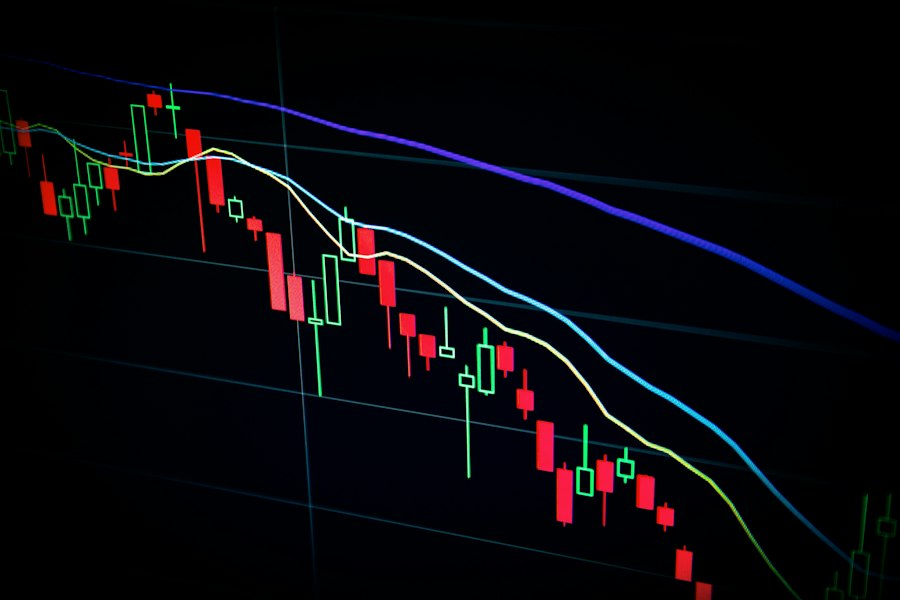
What does $100 oil mean for the stock market?
$100 crude is a major macro signal because it immediately raises inflation risk, squeezes corporate margins, and weakens consumer spending power. When oil crosses that threshold during a geopolitical shock, investors stop treating war as a distant event and start pricing it into earnings, rates, and risk appetite.
That is exactly why equities, which had previously shrugged off the escalating U.S.-Iran conflict, suddenly sold off once oil surged through $100 a barrel. The market is not reacting to headlines alone; it is reacting to the economic transmission mechanism that higher energy prices create across nearly every sector.
Oil is one of the few inputs that can quickly affect transportation costs, manufacturing expenses, airline fuel bills, petrochemical pricing, and household budgets at the same time. In other words, a sharp move in crude can become a broad market event, not just an energy-market event.
Why does war matter for traders once oil breaks out?
War matters because it can disrupt supply, trigger sanctions, and raise the probability of a wider regional shock. Traders can ignore geopolitical risk for a while if oil stays contained, but once prices move above $100, the market has a harder time dismissing the threat as temporary noise.
The key issue is that energy prices feed directly into inflation expectations. If crude remains elevated, investors begin to question whether the Federal Reserve can stay patient, whether bond yields need to reprice higher, and whether the recent market narrative around disinflation still holds.
That combination is especially dangerous for equities that have been priced on the assumption of stable growth and easing policy. A war-driven oil spike can compress valuation multiples even before analysts revise earnings estimates, because the discount rate and risk premium both tend to rise.
How does expensive oil hit stocks across sectors?
Expensive oil acts like a tax on the real economy. It hurts some sectors directly through higher input costs and others indirectly through weaker consumer demand, tighter financial conditions, and rising recession odds.
- Airlines and transportation: fuel is a major operating expense, so margins can deteriorate quickly.
- Consumer discretionary: households spend more at the pump and less elsewhere.
- Industrials: shipping, logistics, and energy-intensive production become less profitable.
- Technology: not as directly exposed, but higher yields and weaker sentiment can pressure long-duration growth stocks.
- Energy producers: often benefit from higher crude, though gains can be offset if the market fears demand destruction or supply retaliation.
For investors, the important point is that a $100 oil environment is rarely neutral. Even if some energy names rally, the broader index can struggle because the negative effects are more widespread than the winners.
What is the market signaling when stocks fall after ignoring conflict for weeks?
The market is signaling that the balance between geopolitics and macroeconomics has changed. When conflict first intensifies, equities often assume it will remain contained; once commodity prices break key levels, investors begin to model second-order effects such as inflation, central-bank pressure, and margin erosion.
That shift matters because it changes what kind of selloff this is. It is no longer just an emotional de-risking event; it becomes a fundamentals-driven repricing of earnings quality, sector leadership, and policy expectations.
Historically, energy shocks have a way of exposing market complacency. A rally built on stable inflation and resilient growth can weaken quickly if the energy input for the global economy jumps sharply. Even if the conflict does not expand further, a sustained oil move can create enough economic drag to slow the market on its own.
How should investors think about portfolio positioning now?
Investors should think in terms of resilience rather than prediction. The goal is not to guess the next headline, but to make sure the portfolio can withstand a scenario in which oil stays elevated, volatility remains elevated, and rate-cut expectations are pushed out.
That usually means favoring balance-sheet strength, pricing power, and cash-generative businesses over highly leveraged or margin-sensitive names. It also means being selective with sectors that depend on cheap fuel, cheap capital, or uninterrupted consumer demand.
- Potential beneficiaries: integrated energy, select refiners, and companies with inflation-linked pricing power.
- Potential laggards: airlines, small-cap cyclicals, and businesses with thin operating margins.
- Key hedge: exposure to sectors or assets that can hold value if inflation reaccelerates.
At the same time, investors should avoid assuming that energy exposure is a simple one-way trade. If oil rises because supply is threatened, energy producers may outperform. But if the market quickly prices in global slowdown or demand destruction, even oil-linked gains can become unstable.
What happens if $100 oil persists?
If crude stays above $100 for long enough, the risk is that the market shifts from a geopolitical shock story to a slower-growth, stickier-inflation story. That would be bearish for broad equities, especially sectors that rely on low rates and confident consumer spending.
Persistent high oil can also complicate monetary policy. Central banks cannot easily ignore a supply-driven inflation impulse if it starts to broaden into wages and expectations. Even without raising rates, policymakers may delay easing, which can keep financial conditions tight and valuation support limited.
For traders, this means the market may become more selective and more volatile. Leadership could rotate toward energy, defensives, and companies with strong free cash flow, while speculative growth names may struggle until oil and inflation settle down.
Bottom Line
$100 oil changes the equity story because it turns war risk into an earnings and inflation problem, not just a headline problem. Once crude crosses that threshold, the market has to price in weaker margins, tighter policy expectations, and a higher chance of growth slowing.
For investors, this is a reminder that geopolitics becomes market-relevant when it hits the real economy. If oil stays elevated, expect more volatility, more sector rotation, and less tolerance for richly valued stocks that depend on a stable macro backdrop.