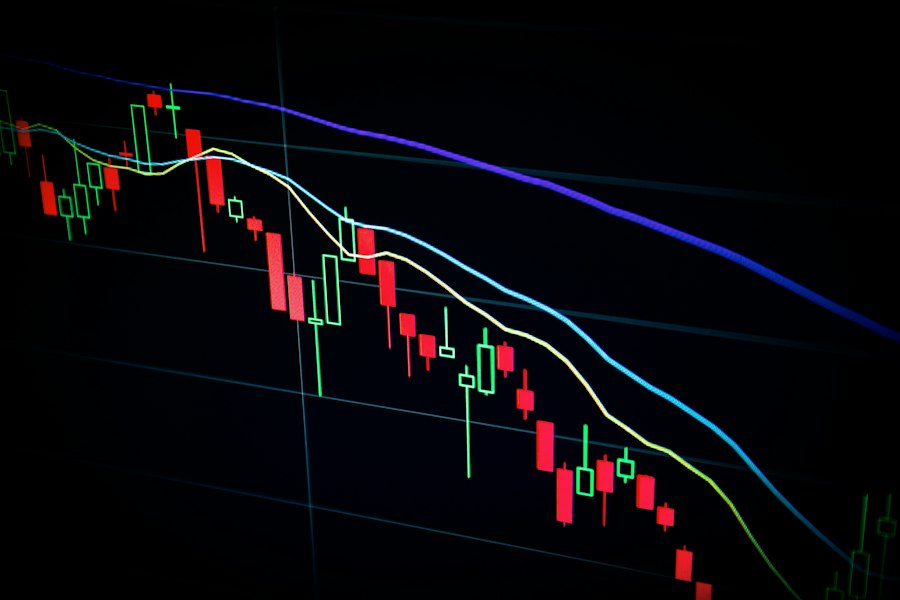
Foreign exchange markets are not volatile in a straight line; they move through regimes. In one regime, yield differentials and central bank divergence explain most of the price action: the Mexican peso grinds higher, USD/JPY follows Treasury yields, and EUR/USD trades like a relative-growth barometer. In another, the VIX jumps, geopolitical risk reprices energy and funding markets, and investors stop asking which currency pays the highest yield. They ask which currency can be sold fastest, funded cheapest, or held through a weekend headline.
That distinction matters because the same macro signal can produce opposite FX outcomes depending on the volatility regime. A hawkish Federal Reserve can lift the dollar in a calm market through rate differentials, but it can also lift the dollar in a crisis through liquidity demand. A dovish Bank of Japan can weaken the yen when volatility is low, yet the yen can still rally violently when leveraged carry trades are forced to unwind. VIX is not an FX indicator by design, but it is one of the best real-time proxies for the balance-sheet constraint that drives global currency moves.
Why VIX Matters for FX Even Though It Is an Equity Volatility Index
The Cboe VIX measures implied volatility on the S&P 500, not EUR/USD or USD/JPY. Yet in practice it captures a broader price of risk because global macro funds, CTAs, risk-parity portfolios, bank trading desks and corporate hedgers all respond to the same volatility shock. When the VIX rises, value-at-risk models force positions down, prime brokers tighten leverage, and investors reduce exposure to high-beta currencies. That mechanical deleveraging is why FX carry trades often break before economic data deteriorates.
A useful operating framework is to separate four regimes. When the VIX is below 15, markets usually reward carry and relative yield. Between 15 and 22, investors become more selective and FX dispersion increases. Above 25, high-yield and current-account-deficit currencies become vulnerable to forced selling. Above 35, the market typically shifts from macro pricing to liquidity pricing, where the U.S. dollar, Swiss franc and sometimes Japanese yen dominate because investors prioritize balance-sheet protection over valuation.
The historical record is clear. On 16 March 2020, the VIX closed near 82.7, its highest level since the global financial crisis, while the dollar funding squeeze drove a broad USD surge until the Federal Reserve expanded swap lines. During Russia's invasion of Ukraine in February and March 2022, the VIX spent time above 30, EUR/USD fell as Europe's terms of trade deteriorated, and central European currencies such as the Polish zloty and Hungarian forint traded as geopolitical risk proxies. In March 2023, the U.S. regional banking stress pushed the VIX above 30 again, and FX markets shifted from inflation trades to bank-liquidity trades almost overnight.
The Dollar Smile Returns When Volatility Jumps
The dollar has a distinctive advantage across volatility regimes because of the so-called dollar smile. It can rise when the U.S. economy outperforms and Treasury yields increase, but it can also rise when global risk appetite collapses and investors need dollar liquidity. That dual role makes the DXY less a simple interest-rate index and more a global stress gauge during risk-off episodes.
The 2022 cycle was a textbook example. The DXY index climbed above 114 in September 2022, its strongest level in two decades, as the Federal Reserve delivered rapid tightening and Europe's energy shock damaged the euro. EUR/USD broke below parity and traded near 0.95, not merely because the European Central Bank was behind the Fed, but because European energy import costs surged after Russia weaponized gas flows. The currency market priced a terms-of-trade shock, a growth shock and a rates shock at the same time.
In calm markets, investors often sell the dollar against higher-yielding EM currencies because the carry pickup is visible and daily volatility is low. In stressed markets, that trade reverses because dollar cash becomes collateral. This is why the dollar can rally even when U.S. yields fall during a crisis: the yield channel is overtaken by liquidity demand. For FX traders, the key is not whether the VIX rises by two points on a weak equity session, but whether it breaks into a new volatility band that changes leverage conditions across asset classes.
Carry Trades: Profitable in Low VIX, Fragile in Geopolitical Shock
Carry trades depend on three conditions: a positive interest-rate differential, stable funding costs, and low realized volatility. The first condition is visible on a screen; the second and third are regime-dependent. That is why USD/MXN, BRL/JPY, INR/JPY or long peso baskets can look exceptionally attractive for months and then lose several months of carry in a few sessions when the VIX resets higher.
Mexico has been the cleanest example of the post-pandemic carry regime. Banxico held its policy rate at elevated levels long after inflation peaked, while nearshoring flows and a relatively disciplined fiscal position supported the peso. In a low-volatility world, the peso's yield cushion encouraged investors to treat USD/MXN rallies as selling opportunities. But the same position becomes crowded when VIX rises above 25, especially if U.S. yields move lower in a risk-off rally and investors reduce gross exposure rather than optimize carry.
The yen is the most important funding currency in this framework. From 2022 through 2024, USD/JPY moved from below 115 to above 160 as the Fed tightened aggressively while the Bank of Japan kept policy exceptionally accommodative for longer. Japan's Ministry of Finance spent roughly ¥9.8 trillion on intervention in April and May 2024 after yen weakness accelerated, following earlier intervention rounds in 2022. Those episodes showed that low-volatility carry can overpower official discomfort for long periods, but intervention risk rises sharply when volatility becomes disorderly.
The complication is that the yen is both a funding currency and a traditional safe haven. In a mild risk-off move, USD/JPY may still track U.S.-Japan rate spreads. In a true deleveraging event, short-yen positions can be covered aggressively, causing yen strength even if Japanese yields remain low. Traders who treat JPY only as a rates trade miss the convexity embedded in global carry positioning.
Geopolitical Risk Changes FX Through Terms of Trade, Sanctions and Inflation
Geopolitical risk matters for currencies because it changes the distribution of outcomes, not just the central forecast. The Caldara-Iacoviello Geopolitical Risk Index, widely used by macro investors, spiked after 9/11, the 2003 Iraq war, Russia's 2022 invasion of Ukraine and major Middle East escalations. FX markets respond through three channels: energy and commodity terms of trade, cross-border capital restrictions, and central bank reaction functions.
Energy is the fastest channel. A Middle East escalation that lifts crude oil tends to support some commodity-linked currencies such as the Canadian dollar and Norwegian krone, but the relationship is not automatic because both also depend on global risk appetite. Oil-importing Asian currencies are more directly exposed. The Japanese yen, Korean won, Indian rupee and Thai baht typically face a negative terms-of-trade impulse when oil rises, although the yen can still strengthen if risk aversion triggers carry unwind. That tension is why USD/JPY can be volatile around energy shocks: Japan imports the inflation, but global investors may buy back the funding currency.
Sanctions and convertibility risk are more extreme. The Russian ruble's collapse and subsequent administrative stabilization in 2022 demonstrated that spot FX prices can stop reflecting free capital mobility when controls are imposed. For EM investors, that lesson extended beyond Russia: liquidity, settlement infrastructure and reserve accessibility became part of currency risk premia. The premium demanded for holding currencies near geopolitical fault lines rose even when local central banks offered high nominal yields.
Inflation is the third channel. If a geopolitical shock raises oil, freight or food prices, central banks face a difficult trade-off. The ECB in 2022 had to tighten into an energy-driven income shock. Asian central banks often lean against imported inflation through FX smoothing rather than aggressive rate hikes, especially where household debt is high. EM central banks with weaker credibility must often defend currencies more forcefully because FX depreciation passes quickly into food and fuel prices.
How to Trade the Regime Shift Rather Than the Headline
The practical mistake is to trade every geopolitical headline as if it creates the same FX outcome. A missile strike, shipping disruption, election shock or banking stress can all lift volatility, but the currency transmission differs. The first question should be whether the event raises global funding stress, changes commodity prices, or creates a localized capital-flight problem. The second is whether the VIX confirms that investors are reducing risk across portfolios.
A disciplined FX volatility framework should monitor:
- VIX level and direction: below 15 favors carry; above 25 demands reduced leverage and wider stop-loss assumptions.
- MOVE index and Treasury volatility: FX often reacts more to rates volatility than equity volatility, particularly USD/JPY and EUR/USD.
- Cross-currency basis: widening dollar funding basis signals that the dollar liquidity channel is becoming dominant.
- Oil and gas prices: crucial for EUR, JPY, KRW, INR, CAD and NOK because terms-of-trade effects differ sharply.
- Positioning: crowded carry trades are most vulnerable when volatility breaks higher, even if fundamentals remain intact.
In low VIX regimes, investors can be paid to own selective carry: MXN against low-yield funders, INR with RBI-managed volatility, or baskets of high-real-rate EM currencies where current accounts are stable. In transition regimes, options become more valuable than spot leverage because implied volatility may still be underpriced relative to event risk. In crisis regimes, the cleanest expression is often not buying every safe haven, but owning dollar calls against high-beta FX or CHF against European cyclicals where energy and regional risk overlap.
Volatility regimes do not forecast every tick in FX, but they tell investors which macro variable the market is willing to price: yield in calm markets, liquidity in stress, and survival during geopolitical shock.
What Comes Next for FX Volatility
The next major FX move is unlikely to be driven by central bank policy alone. The Fed, ECB, Bank of Japan and major EM central banks still matter, but their signals now interact with a world of higher fiscal deficits, fragmented trade routes, sanctions risk and more frequent geopolitical tail events. That combination makes volatility regimes more persistent and more asymmetric than in the pre-pandemic decade.
For EUR/USD, the key risk is whether geopolitical shocks again hit Europe's energy balance or manufacturing cycle just as rate differentials narrow. For USD/JPY, the question is whether Japanese policy normalization can reduce the carry incentive before another volatility shock forces a disorderly unwind. For EM FX, the winners will be currencies with high real yields, credible central banks and manageable external financing needs; the losers will be those offering carry that disappears once hedging costs and liquidity risk are included.
The actionable takeaway is straightforward: do not analyze FX volatility as noise around a central bank forecast. Treat it as the regime variable that determines whether central bank divergence, carry, commodities or liquidity dominates price action. When the VIX is low, investors can harvest yield. When VIX and geopolitical risk rise together, the market stops paying for patience and starts paying for optionality, liquidity and balance-sheet discipline.