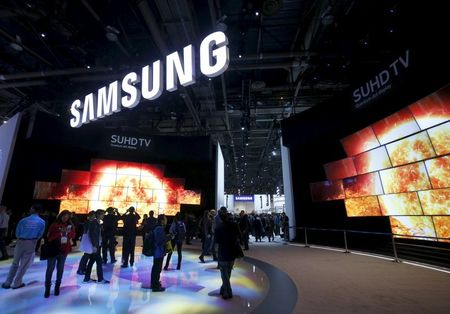
Samsung Rebound Is More Than a Single-Stock Story
Samsung Electronics shares rebounded after market chatter pointed to a potentially large share buyback plan, giving investors a fresh reason to revisit one of Asia’s most important equity bellwethers. For South Korea, this is not just a corporate finance headline. Samsung is the dominant weight in the local equity market, a central player in the global semiconductor cycle, and a key influence on foreign portfolio flows into Korean assets.
A buyback, if confirmed at meaningful scale, would arrive at a sensitive moment. Investors have been trying to balance optimism around artificial intelligence demand, high-bandwidth memory, and a broader chip recovery against concerns over competitive positioning, execution, and margins. The immediate share-price reaction suggests the market sees the reported plan as a signal that management believes the stock is undervalued and that shareholder returns are becoming a higher priority.
For currency markets, the issue is subtler but important. Samsung-related equity flows can affect sentiment toward the Korean won, particularly when foreign investors are active. A stronger Samsung bid can lift the KOSPI, improve Korea’s risk profile, and encourage overseas capital inflows. That does not guarantee a sustained won rally, but it can reduce pressure on USD/KRW when global risk appetite is supportive.
Why Buybacks Matter for Samsung
Share buybacks create value in several ways. They reduce the number of shares outstanding, which can support earnings per share. They also provide a demand backstop for the stock, particularly during periods of investor uncertainty. Most importantly, in markets such as South Korea, buybacks are often interpreted through the lens of corporate governance and capital discipline.
Korean conglomerates have historically traded at valuation discounts partly because investors questioned capital allocation, minority shareholder treatment, and complex ownership structures. When a national champion signals that it may return more capital to shareholders, global investors tend to pay attention. For Samsung, the signal is especially meaningful because its balance sheet is large, its cash generation is cyclical but powerful, and its investment needs are closely tied to the next generation of semiconductor demand.
The market will care about several details:
- Size: A symbolic buyback would help sentiment briefly, but a truly large program could alter supply-demand dynamics for the shares.
- Cancellation: Investors generally prefer repurchased shares to be cancelled rather than held as treasury stock, because cancellation clearly reduces share count.
- Funding: A domestically funded buyback has less direct FX impact than one involving repatriation of offshore cash.
- Timing: Front-loaded purchases can create stronger near-term support, while a long window may dilute the market impact.
- Business backdrop: Buybacks are most powerful when paired with improving earnings, not when used to distract from operational weakness.
The Chip Cycle Remains the Core Driver
Samsung’s equity story still hinges on semiconductors. Memory markets have been recovering from one of the industry’s deeper downturns, helped by inventory normalization and AI-linked demand. However, the recovery has not been evenly distributed. High-bandwidth memory has become a critical battleground, and investors have closely watched whether Samsung can regain momentum against rivals that have benefited from early AI server demand.
This is why a buyback can change positioning but not the fundamental debate. If Samsung improves execution in advanced memory, foundry competitiveness, and AI-related supply, the buyback becomes an accelerator for a stronger equity rerating. If operational progress disappoints, the buyback may only provide a temporary valuation cushion.
Retail investors should also remember that chip stocks are highly cyclical. Earnings can inflect sharply when pricing improves, but capital expenditure requirements are enormous. Samsung must continue spending heavily to compete in next-generation memory, logic manufacturing, and packaging technologies. A buyback is positive, but investors will want assurance that shareholder returns are not coming at the expense of strategic investment.
Implications for the Korean Won
The USD/KRW exchange rate is driven by a mix of global dollar trends, Federal Reserve expectations, Korea’s trade cycle, energy import costs, China-linked sentiment, and foreign investment flows. Samsung matters because it sits at the intersection of exports, technology sentiment, and portfolio allocation.
When foreign investors buy Korean equities, they often need won exposure, either directly through currency conversion or indirectly through hedging decisions. If Samsung’s rebound pulls broader KOSPI flows higher, that can provide near-term support for the won. The effect is usually strongest when global markets are already in a risk-on mood and the dollar is not broadly strengthening.
However, the FX impact of a buyback is not automatic. If the company buys shares using existing won liquidity, there may be little direct currency conversion. If offshore funds are repatriated to finance purchases, it could create additional won demand. The market will therefore watch not only the headline size of the program but also the funding mechanics.
For traders, the key question is whether Samsung’s rebound becomes a Korea-wide asset allocation story. A single-day stock bounce can fade quickly. A sustained rerating of Korean technology shares, supported by improving semiconductor exports and credible shareholder return policies, would be more meaningful for the won.
Broader Market Signal: Korea’s Valuation Discount
The reported buyback also feeds into a larger theme: Korea’s effort to narrow its equity market valuation discount. Investors have long argued that many Korean companies trade below global peers despite strong industrial franchises. Reasons include low dividend payouts, complicated governance, and limited shareholder engagement.
If Samsung moves decisively on buybacks, it may pressure other large Korean companies to follow. That could support the KOSPI by improving perceptions of capital discipline. For global investors comparing Japan, Taiwan, and South Korea, shareholder return policies increasingly matter alongside earnings growth.
There is an important parallel with Japan’s recent equity rerating, where corporate governance reforms, buybacks, and balance sheet efficiency helped attract foreign capital. South Korea is not Japan, and its market structure is different, but the investor psychology is similar: when companies show they are willing to return excess capital, valuation multiples can expand.
What Could Derail the Rally?
Several risks remain. First, a buyback report must become a concrete plan. Markets often price optimism quickly, and disappointment on size or structure could reverse gains. Second, the semiconductor cycle remains exposed to global growth, AI capex sustainability, and pricing discipline. Third, a stronger won, while helpful for foreign investors, can pressure exporters’ translated earnings if it moves too far too fast.
Macro conditions also matter. If the U.S. dollar strengthens on higher Treasury yields or delayed rate cuts, the won may struggle even if Samsung performs well. Likewise, renewed concerns about China’s economy could weigh on Korean assets because Korea is deeply tied to regional trade and manufacturing demand.
Bottom Line
The reported Samsung buyback is a significant equity catalyst because it touches valuation, shareholder returns, and investor confidence in Korea’s largest corporate franchise. For Samsung shareholders, the details will determine whether the move is a short-term sentiment boost or a durable rerating event.
For forex investors, the story is worth watching because stronger Samsung shares can improve foreign appetite for Korean assets and offer support to the won. But the currency impact depends on global dollar conditions, foreign flow persistence, and how the buyback is funded. The most bullish scenario for Korea would combine a confirmed large buyback, improving chip earnings, stronger semiconductor exports, and a softer U.S. dollar. Until then, Samsung’s rebound is an important signal, but not yet a standalone macro turning point.