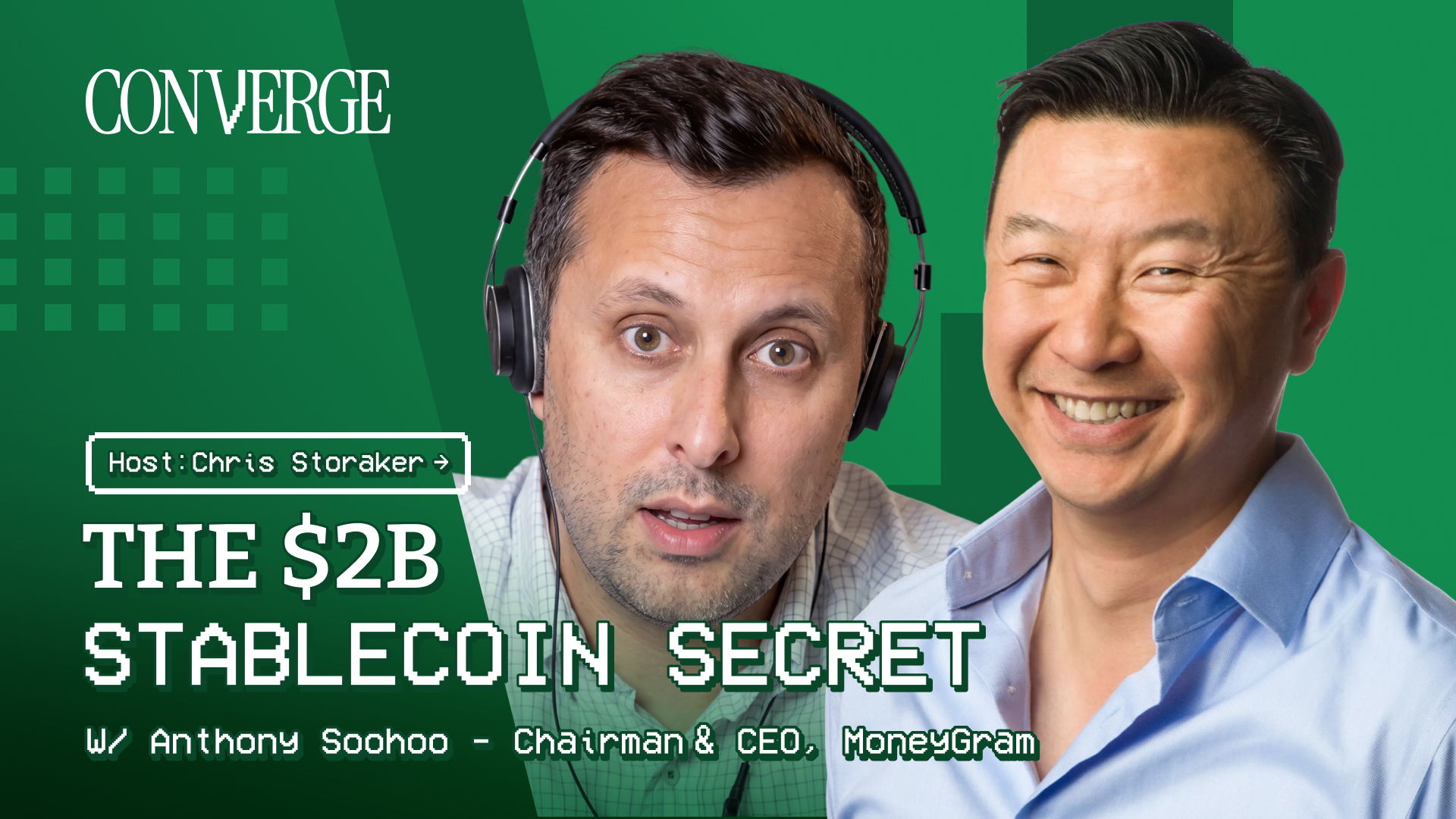
MoneyGram Moves From Crypto Experimentation to Stablecoin Distribution
MoneyGram’s planned rollout of MGUSD to a global customer base of roughly 60 million users marks one of the more important stablecoin adoption stories of 2026. For years, stablecoins have been discussed as a better rail for cross-border payments: faster settlement, lower intermediary costs, and 24/7 liquidity. The missing piece has often been distribution. MoneyGram already has that piece.
The company operates across about 200 countries and territories, connects tens of thousands of payment corridors, and maintains a massive physical retail footprint. That matters because the next wave of stablecoin adoption is unlikely to be driven only by crypto-native traders moving assets between exchanges. It is more likely to come from people who need to send, receive, hold, or convert dollars across borders without waiting days or paying high fees. MGUSD is aimed directly at that use case.
Why This Is More Than Another Corporate Stablecoin
Corporate stablecoins are not new, and many have failed to gain meaningful traction because they lacked either trust, utility, liquidity, or regulatory clarity. MoneyGram’s advantage is that it sits at the intersection of all four. Its core business is already global money movement, and its customers are already accustomed to converting between cash, bank balances, and mobile wallets.
The firm has also spent several years building blockchain infrastructure rather than simply announcing a token. The reported scale is notable: more than $2 billion in stablecoin settlements have already moved through its systems. That suggests MGUSD is not being introduced into a blank environment. It is being layered onto operational payment flows where stablecoins are already being tested as back-end settlement tools.
The distinction is important. A consumer may not care whether a remittance is settled through correspondent banks, internal treasury accounts, or a stablecoin ledger. What they care about is price, speed, reliability, and access to local currency. If MoneyGram can use MGUSD to improve those variables while abstracting away wallet complexity, the adoption curve could look very different from prior retail crypto products.
The Kraken Partnership Adds Liquidity and Market Infrastructure
A partnership with Kraken gives MGUSD a stronger market-structure foundation than many branded payment tokens. Stablecoins live or die by convertibility. Users need confidence that one unit can be redeemed, traded, or converted at par into dollars or local currency with minimal slippage.
Kraken can potentially support that by providing crypto liquidity, exchange connectivity, institutional-grade custody rails, and trading infrastructure. For retail users, the practical impact could be smoother access between MGUSD and broader digital asset markets. For MoneyGram, it creates a bridge between traditional remittance users and crypto-native capital pools.
That does not mean MGUSD will immediately become a rival to USDT or USDC. The largest stablecoins benefit from deep exchange listings, DeFi integrations, OTC liquidity, and widespread trust among institutions. But MGUSD does not need to displace them to matter. If it becomes a reliable payment-specific dollar token embedded in MoneyGram’s network, it could carve out a powerful niche in remittances, payouts, payroll, and cash-to-digital conversion.
Tempo Validator Role Signals a Bet on Purpose-Built Payment Rails
MoneyGram’s validator seat on the Tempo network is another signal that the company is not treating blockchain as a marketing layer. Validators help secure and operate blockchain networks, and a payments company taking such a role suggests deeper alignment between settlement infrastructure and business strategy.
For payments, network design matters. General-purpose blockchains can be powerful, but they are not always optimized for regulated, high-volume consumer payment flows. A payment-focused network can prioritize low fees, fast finality, compliance hooks, and predictable performance. Those features are critical if a firm is serving users across hundreds of jurisdictions and thousands of corridors.
The broader market implication is that stablecoin infrastructure is fragmenting into specialized rails. Ethereum remains dominant for DeFi liquidity, Solana has gained traction for high-throughput stablecoin activity, and newer networks are competing for institutional payments. MoneyGram’s move reinforces the idea that the stablecoin economy will not be monolithic. Different rails may serve trading, remittances, merchant settlement, and tokenized financial markets.
What MGUSD Could Change for Remittances
Cross-border remittances remain one of the clearest real-world use cases for stablecoins. Traditional transfers can be expensive, especially for smaller amounts. Fees, foreign exchange spreads, prefunding requirements, and correspondent banking delays all add friction. Stablecoins can reduce some of those costs by allowing value to move digitally across borders in minutes rather than through a chain of intermediaries.
MoneyGram’s physical network could also solve one of crypto’s hardest problems: cash in, cash out. In many remittance corridors, recipients still prefer or require local cash. A stablecoin is only useful if it can be converted into spendable money. MoneyGram’s retail footprint gives MGUSD a potential off-ramp that most DeFi protocols and crypto wallets do not have.
Key areas to watch include:
- Pricing: Whether MGUSD lowers total remittance costs after spreads, network fees, and conversion charges.
- Availability: How many corridors support MGUSD at launch and how quickly coverage expands.
- Redemption: Whether users can reliably convert MGUSD into dollars, local bank deposits, mobile money, or cash.
- Compliance: How MoneyGram handles know-your-customer, sanctions screening, and local licensing rules.
- Wallet experience: Whether users need to understand seed phrases and blockchain networks, or whether the product feels like a normal payment app.
DeFi Implications: Distribution Is the New Liquidity
For DeFi investors, the biggest takeaway is not simply that another stablecoin is entering the market. It is that a major legacy money-transfer firm is becoming a distribution layer for on-chain dollars. Stablecoins already dominate crypto settlement, accounting for a large share of transaction volume across centralized exchanges and DeFi protocols. Yet most stablecoin usage still occurs inside crypto ecosystems.
MGUSD could help push stablecoins into everyday financial behavior. If users begin receiving remittances in tokenized dollars, holding small balances, and converting across local currencies, those balances may eventually connect to yield products, lending markets, and programmable payment tools. That path will be heavily regulated, but it is where the long-term opportunity lies.
DeFi protocols should not assume MGUSD liquidity will automatically flow into open lending pools or decentralized exchanges. A MoneyGram-issued or MoneyGram-distributed stablecoin may operate in a more permissioned environment, especially if it is designed for compliance-sensitive payment corridors. Still, even permissioned stablecoin growth can benefit the broader market by normalizing tokenized cash, expanding on-chain settlement volume, and pressuring traditional banks to modernize payment infrastructure.
The Risks Are Real
Retail investors should avoid treating MGUSD as an automatic win for the entire crypto market. Stablecoin businesses face several major risks. Regulation is the first. Issuers and distributors must satisfy reserve, disclosure, licensing, sanctions, and consumer-protection requirements across many jurisdictions. A product that works in one corridor may require a different legal structure in another.
Reserve quality is another key issue. Users will want clarity on whether MGUSD is fully backed by cash, short-term Treasuries, bank deposits, or other instruments, and who has redemption rights. The strongest stablecoins have learned that transparency is not optional; it is the foundation of trust.
There is also execution risk. MoneyGram’s customer base is large, but consumer behavior changes slowly. Many remittance users are fee-sensitive, risk-averse, and unfamiliar with crypto. MGUSD will need to be faster and cheaper without feeling more complicated. If the user experience is clunky, the technology advantage may not matter.
Bottom Line
MoneyGram’s MGUSD rollout is significant because it combines three things the stablecoin sector badly needs: real users, global cash access, and operational payment infrastructure. The move is unlikely to spark an immediate market-wide rally, but it is a meaningful adoption catalyst for tokenized dollars in cross-border payments.
The most important question is not whether MGUSD becomes the largest stablecoin. It probably will not in the near term. The better question is whether MoneyGram can make stablecoins invisible to the end user while improving speed, cost, and reliability. If it can, MGUSD may become a template for how legacy payment networks and blockchain rails converge. For DeFi, that convergence is a reminder that the next major wave of adoption may arrive not through speculative trading, but through the simple need to move money across borders more efficiently.