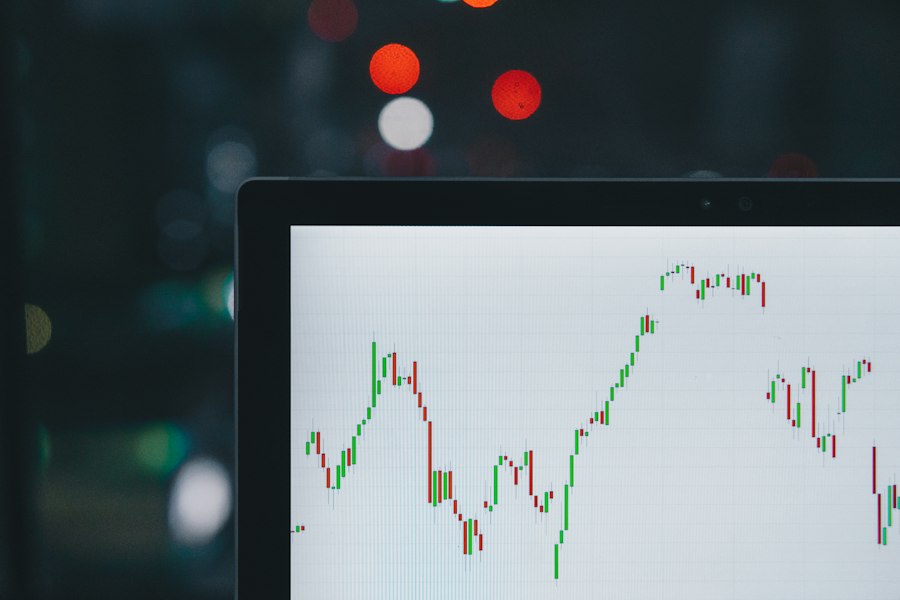
KOSPI Surge Forces a Volatility Pause
South Korea’s benchmark KOSPI index was temporarily paused after a chipmaker-led rally drove the market more than 5% higher, a move large enough to activate exchange volatility safeguards and immediately put Asian equity traders on alert. For a major developed-market benchmark, a one-session gain of that magnitude is rare. It signals not just enthusiasm around a few heavyweight semiconductor names, but a broader repricing of earnings expectations, foreign capital flows, and global risk appetite.
The rally appears to have been concentrated in Korea’s dominant technology complex, where memory-chip and artificial-intelligence supply-chain leaders exert an outsized influence on the index. In practical terms, when large-cap chipmakers move sharply, the KOSPI can move with them. That makes South Korea one of the world’s most direct public-market expressions of the global semiconductor cycle.
A trading pause does not necessarily mean the market is broken. It is designed to slow activity when price action becomes disorderly or unusually fast. But psychologically, it matters. It tells investors that buying pressure was strong enough to overwhelm normal intraday liquidity, forcing the market structure itself to step in.
Why Chipmakers Are Driving the Move
The immediate catalyst is the market’s renewed conviction that the AI hardware cycle remains stronger for longer. Korean semiconductor giants sit at the center of several crucial trends: high-bandwidth memory, advanced DRAM, enterprise server demand, and the data-center arms race among global cloud and AI companies. Investors are increasingly treating memory suppliers not as old-cycle commodity producers, but as strategic infrastructure providers for artificial intelligence.
That shift is important. Historically, memory-chip stocks traded with brutal boom-and-bust cyclicality. When supply tightened, margins expanded rapidly; when capacity caught up, prices collapsed. The AI era has complicated that pattern. High-end memory used in AI accelerators is harder to manufacture, capacity additions are more constrained, and customers are often willing to secure supply through longer-term commitments. That supports the argument for higher valuation multiples than the sector received in prior cycles.
There is also a portfolio-flow angle. Global investors seeking exposure to the AI trade have already crowded into US megacap technology stocks. Korea offers a different route: fewer trillion-dollar platform companies, but more direct exposure to the physical bottlenecks behind AI computing. If investors believe chip supply remains scarce, Korean equities can attract aggressive foreign inflows.
Why a 5% Index Move Is So Unusual
A 5% gain in a single benchmark session is not just a bullish day; it is a market event. Developed equity indices usually move in fractions of a percent. A jump of this scale typically requires a combination of concentrated index leadership, heavy foreign buying, short covering, and systematic momentum flows.
Several forces can amplify the move:
- Index concentration: Korea’s largest semiconductor companies carry major benchmark weight, so sharp gains in those stocks can lift the entire market.
- Short covering: Traders positioned for a pullback may be forced to buy back shares quickly as prices break higher.
- Quant and momentum strategies: Breakouts through technical levels can trigger additional systematic buying.
- Currency effects: If the Korean won stabilizes or strengthens, foreign investors may become more comfortable adding exposure.
- Regional spillover: Strength in Taiwan, Japan, or US semiconductor futures can reinforce the Korea trade.
The pause therefore reflects both optimism and fragility. Strong rallies are welcome, but vertical price action often means positioning has become one-sided in the short term.
Implications for Asian Markets
The KOSPI move is likely to reverberate across Asia. Taiwan’s equity market, Japan’s semiconductor equipment names, and broader emerging Asia technology baskets all tend to respond when investors reprice the AI hardware supply chain. A Korean chip surge can strengthen the narrative that Asia remains indispensable to global tech production, even as end-demand is often driven by US cloud platforms and multinational enterprise spending.
For Japan, the signal is particularly relevant because its market includes important suppliers of semiconductor materials, testing equipment, and precision manufacturing tools. For Taiwan, it reinforces the premium attached to advanced chip fabrication and packaging. For China, it is more complicated: Korean strength may highlight the competitive distance between global leaders and domestically focused Chinese semiconductor firms, while also underscoring the strategic urgency of self-sufficiency.
Regional currencies may also react. A powerful equity rally can support the Korean won if foreign investors buy local shares and hedge less aggressively. However, currency gains are not guaranteed. If the rally is perceived as speculative or if the US dollar remains firm due to interest-rate differentials, equity strength and currency weakness can coexist.
What This Says About Global Risk Appetite
This is not only a Korea story. It fits into a wider global market regime where investors remain willing to pay for growth tied to AI, productivity, and data-center capital expenditure. The enthusiasm suggests that, despite periodic concerns about stretched valuations, the market is still rewarding companies linked to tangible AI infrastructure rather than purely conceptual AI narratives.
That distinction matters for retail investors. The first phase of the AI trade was about software imagination and platform dominance. The next phase is increasingly about power, chips, memory, cooling, networking, and manufacturing capacity. Korea’s rally indicates that investors are still searching for the real-world bottlenecks that can translate AI demand into revenue and earnings.
Still, a trading pause after a surge is not an all-clear signal. It is a reminder that price and fundamentals can separate quickly. If earnings revisions fail to keep up with share-price gains, the rally can become vulnerable to profit-taking. Semiconductor stocks are also highly sensitive to export controls, capital spending cycles, inventory data, and guidance from major AI accelerator customers.
Risks Investors Should Not Ignore
The biggest risk is that investors extrapolate too much from one explosive session. Semiconductor cycles can look strongest near moments of peak optimism. Even if AI demand is structurally durable, stock prices can overshoot when everyone tries to enter the same trade at once.
Key risks include:
- Valuation risk: Faster share-price gains raise the bar for earnings delivery.
- Policy risk: Export restrictions or geopolitical tensions can disrupt supply chains and customer access.
- Capex risk: If cloud companies slow data-center spending, semiconductor demand expectations could reset.
- Supply risk: New capacity can eventually pressure pricing, even in high-end memory.
- Market-structure risk: Forced buying can reverse quickly once momentum fades.
For diversified investors, the event argues for reviewing exposure rather than blindly chasing. Those already overweight AI and semiconductors may want to assess concentration risk. Those underexposed may prefer phased entry strategies, using volatility rather than emotion to build positions.
How Retail Investors Can Interpret the Pause
The most constructive interpretation is that global investors are assigning greater value to Korea’s role in the AI supply chain. The most cautious interpretation is that a crowded trade just became more crowded. Both can be true at the same time.
Retail investors should focus less on the trading halt itself and more on what follows. Sustained foreign inflows, improving earnings estimates, firmer memory pricing, and management guidance would support the rally’s credibility. By contrast, a quick reversal, weak breadth outside chipmakers, or heavy profit-taking would suggest the move was primarily technical.
The breadth of the rally will be especially important. If banks, industrials, consumer names, and smaller technology firms begin participating, the KOSPI move may signal a broader Korean equity re-rating. If gains remain limited to a handful of chip leaders, the index could become increasingly dependent on a narrow AI narrative.
Bottom Line
The KOSPI trading pause after a more than 5% chipmaker-driven surge is a major signal from Asian markets. It reflects intense demand for AI-linked semiconductor exposure, renewed confidence in Korea’s heavyweight technology sector, and a broader willingness among investors to embrace risk when earnings momentum appears compelling.
But powerful rallies require discipline. The AI hardware cycle may still have room to run, yet a vertical move in a major index raises the odds of near-term volatility. For investors, the opportunity is real, but so is the need to separate structural winners from momentum-driven excess. Korea has just reminded global markets that the AI trade is not only built in Silicon Valley; it is also manufactured, supplied, and priced across the semiconductor capitals of Asia.