Samsung’s Slide Turns Into a Market Event
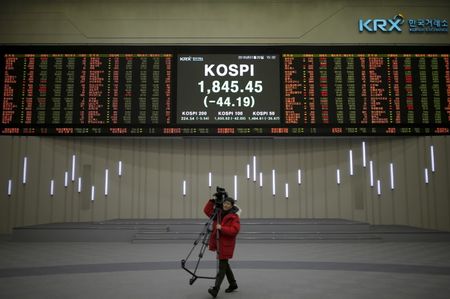
South Korea’s benchmark KOSPI is on the verge of entering a bear market, with the latest leg lower driven by a deepening selloff in Samsung Electronics. A bear market is typically defined as a decline of 20% or more from a recent peak, and for Korea the threshold carries more than symbolic weight. Because Samsung is not simply another large-cap stock but the anchor of the country’s equity market, currency sentiment, export cycle and global semiconductor narrative, weakness in the shares can quickly become a broader risk signal.
The rout is notable because Korean equities had been treated by many global investors as a leveraged play on the artificial intelligence infrastructure boom, memory-chip recovery and improving shareholder returns. When that thesis weakens, the KOSPI can move sharply. Foreign investors, who are often decisive at the margin in Seoul, tend to reduce exposure quickly when earnings momentum in mega-cap exporters comes into question or when the Korean won is under pressure.
Why Samsung Matters So Much to the KOSPI
Samsung Electronics is one of the world’s most important technology manufacturers and one of the heaviest-weighted names in any major national benchmark. Between its common shares and related listings, Samsung-linked exposure can represent a very large share of Korean index risk. That means a single-stock decline can pull down passive funds, trigger factor selling and drag sentiment across suppliers, chip-equipment names, financials and domestic cyclicals.
The company is also central to Korea’s export engine. Its performance is closely tied to DRAM, NAND flash, smartphones, displays and increasingly high-bandwidth memory used in AI servers. Investors have been willing to pay up for Korean semiconductor exposure when they believed pricing power and volume growth were improving together. But that trade becomes fragile if markets start questioning whether Samsung can close the gap with more specialized competitors in premium AI memory, protect margins in commoditized memory or convert heavy capital expenditure into higher returns.
For the KOSPI, the problem is concentration. A diversified index can absorb weakness in one sector. Korea’s index has always been more cyclical and export-oriented, which makes it powerful during upturns but vulnerable when the global tech cycle wobbles.
The AI Trade Is Facing a Reality Check
The bigger backdrop is the maturing of the AI equity trade. Over the past several years, investors have rewarded companies linked to data centers, advanced chips, power infrastructure and cloud spending. Yet as valuations expanded, expectations became harder to beat. Semiconductor investors are now asking more granular questions: Which companies have pricing power? Which have the right product mix? Which are suppliers to the most profitable parts of the AI stack rather than simply beneficiaries of broad enthusiasm?
Samsung’s weakness suggests investors are no longer buying the entire semiconductor complex indiscriminately. In memory, the distinction between standard chips and high-bandwidth memory has become crucial. AI servers require advanced memory that is tightly integrated with leading graphics processors and accelerators. If market participants perceive Samsung as losing share, lagging qualification timelines or facing margin pressure, the stock can underperform even while the long-term AI demand story remains intact.
This is an important lesson for retail investors: a strong secular theme does not guarantee that every company in the theme will rise. In fact, when a theme becomes crowded, dispersion often increases. The winners become more expensive, the laggards get punished, and index-heavy markets can suffer even when the macro narrative appears positive.
Foreign Flows, the Won and the Feedback Loop
Korean equities are highly sensitive to foreign portfolio flows. When global funds buy Korean tech exporters, they often support both the stock market and the Korean won. When they sell, the effect can reverse. A weaker won can help exporters over time by improving translated revenues, but in the short run it often signals risk aversion and can pressure foreign-currency investors’ returns.
This creates a feedback loop. Samsung falls, the KOSPI weakens, foreign investors reduce exposure, the won comes under pressure, and currency-adjusted performance deteriorates further. If U.S. bond yields are elevated or the dollar is firm, the pressure can intensify. Korea’s market is particularly exposed to this dynamic because it sits at the intersection of global technology demand, China growth expectations, U.S. rates and Asian currency risk.
Investors should also watch credit and funding conditions. Korean corporates are generally well established, but equity bear markets can tighten financial conditions indirectly by depressing confidence, reducing IPO activity and weighing on household wealth. A sharp fall in mega-cap technology names can also spill into retail sentiment, because domestic investors often hold these shares as core long-term positions.
What Could Stabilize the Market?
For the KOSPI to stabilize, investors likely need evidence on at least one of three fronts: Samsung-specific execution, macro relief or policy support.
- Samsung execution: Clearer signs of competitiveness in high-bandwidth memory, improving memory pricing, disciplined capex and better margin guidance would help rebuild confidence.
- Macro relief: A softer dollar, lower global yields or stronger export data could reduce pressure on foreign flows and improve risk appetite toward Asian equities.
- Policy support: Korea has been pursuing corporate governance reforms and measures aimed at reducing the long-standing Korea discount. Faster progress on buybacks, dividends and board accountability could provide a valuation floor.
Still, stabilization is not the same as a durable bottom. Bear markets often include sharp relief rallies, especially when positioning becomes crowded on the short side. But sustainable recoveries generally require earnings revisions to stop falling. In Korea’s case, analysts and investors will focus on semiconductor pricing, order visibility, inventories and commentary from major cloud and hardware customers.
How Investors Should Think About the Selloff
For educated retail investors, the key is to separate index risk from company risk. Buying the KOSPI at bear-market levels may look attractive on valuation, especially if price-to-book ratios move toward historically depressed zones. However, the index is not a neutral basket. It is a concentrated bet on exporters, technology hardware, financials and global liquidity conditions.
Investors with a long time horizon may see the selloff as an opportunity to build exposure gradually, but lump-sum buying into a falling market can be emotionally and financially difficult. A staged approach can reduce timing risk. Traders, by contrast, should respect momentum. If Samsung continues to make lower lows and foreign selling remains heavy, technical support levels may matter less than liquidity and positioning.
Risk management is particularly important because bear-market thresholds can trigger mechanical responses. Some funds reduce exposure when volatility rises. Passive flows can amplify declines if investors redeem regional ETFs. Quantitative strategies may cut Korea exposure if price momentum and currency signals deteriorate at the same time.
It is also worth comparing Korea with regional alternatives. Taiwan may continue attracting AI hardware flows if investors prefer companies with clearer leadership in advanced chip manufacturing. Japan may benefit from corporate reform and yen dynamics. India may retain a domestic-demand premium, though valuations there are often richer. In that landscape, Korea must compete not only on cheapness but on earnings credibility.
Signals to Watch Next
The next phase of the KOSPI move will likely depend on whether the Samsung rout remains contained or becomes systemic. Investors should monitor daily foreign net buying or selling, won volatility, semiconductor export data, memory spot prices, analyst earnings revisions and management commentary from major technology customers. A reversal in any one indicator may not be enough; a cluster of improving signals would be more meaningful.
Technically, a confirmed bear market can damage sentiment, but it can also reset expectations. The strongest rallies often begin when pessimism is widespread and incremental news stops getting worse. For now, however, the burden of proof remains on the bulls. Samsung must show that the market is over-discounting its challenges, while the KOSPI needs broader participation beyond a handful of exporters.
Bottom Line
The KOSPI’s slide toward bear-market territory is not just a local equity story. It is a stress test for the global AI trade, Asian semiconductor positioning and investor appetite for cyclical export markets. Samsung’s deepening selloff matters because it sits at the center of Korea’s market structure and earnings narrative. Valuations may become more attractive as prices fall, but cheap markets can stay cheap when earnings visibility deteriorates and foreign flows turn negative.
For investors, the opportunity is real but so is the risk. A durable rebound likely requires proof that Samsung can defend its technology position, that semiconductor demand remains resilient and that currency pressure does not overwhelm equity returns. Until then, Korea should be treated as a high-beta market where discipline, position sizing and patience matter more than headline-driven bargain hunting.