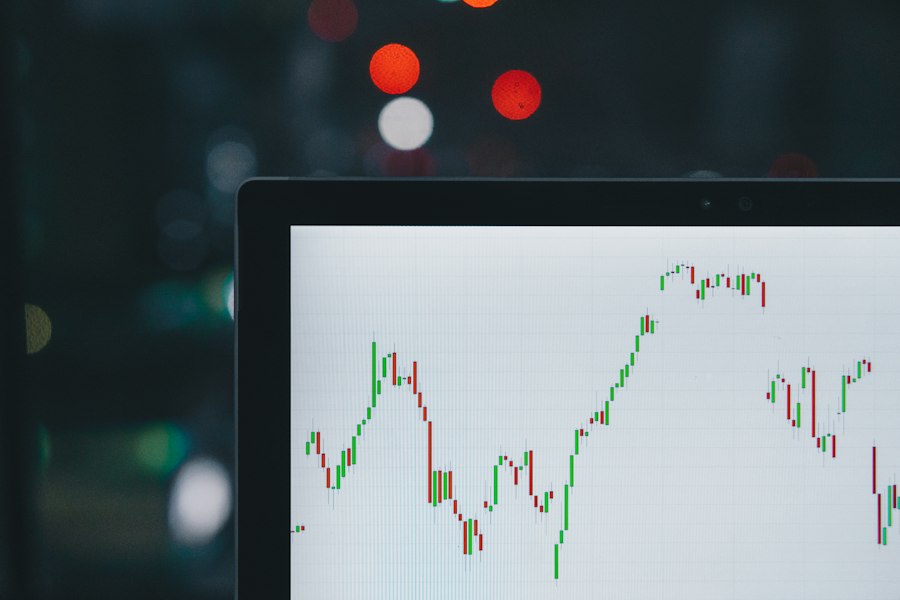
Gold is behaving less like a cyclical commodity and more like a reserve asset being re-rated. The metal's break to all-time nominal highs has occurred despite positive US real yields, a firm dollar, and intermittent liquidation from Western exchange-traded funds. That combination matters: in prior cycles, higher real rates usually capped bullion. In this cycle, official sector demand has changed the clearing price.
The central bank gold buying story is not a slogan. It is visible in tonnage, geography, and timing. After Russia's foreign reserves were immobilized in 2022, reserve managers in Beijing, Warsaw, Ankara, New Delhi, Singapore, and other capitals accelerated purchases of an asset with no issuer, no sanctions committee, and no settlement dependency on the US banking system. The de-dollarization thesis is often overstated, but the marginal buyer of gold is clearly telling us that reserve diversification has moved from theory to balance-sheet policy.
The New Gold Buyer Is Not the ETF Tourist
For most of the post-2008 bull market, gold prices were driven by Western investment flows, especially ETF inflows tied to falling real yields and monetary easing. That mechanism weakened after 2022. US 10-year Treasury inflation-protected securities yields moved from deeply negative territory to around 2% during 2023 and 2024, a level that would historically pressure non-yielding bullion. Yet gold held firm and then advanced to record highs.
The explanation is that central banks have absorbed physical supply at a scale not seen in modern reserve management. World Gold Council data show official sector net purchases of roughly 1,082 tonnes in 2022 and 1,037 tonnes in 2023, the two strongest years on record. Buying remained elevated in 2024, with the official sector on track for a third year near or above 1,000 tonnes. For context, annual mine production is roughly 3,600 to 3,700 tonnes. Central banks have therefore been taking more than a quarter of newly mined supply in the strongest buying years.
This is structurally different from ETF demand. A gold ETF holder can sell on a change in Fed expectations within hours. A central bank accumulating bullion for reserve security, sanctions insurance, or currency credibility is less price-sensitive and more strategic. That is why dips have been shallow: physical demand has repeatedly emerged when speculative positioning cools.
De-Dollarization Is Not Dollar Collapse, It Is Reserve Diversification
The phrase de-dollarization invites bad analysis because it suggests a binary event: the US dollar either remains dominant or loses reserve status overnight. The reality is more incremental and therefore more investable. The dollar still accounts for about 58% of disclosed global foreign exchange reserves, according to IMF COFER data, and it remains central to trade finance, commodities pricing, and cross-border bank liabilities. BIS data also show the dollar on one side of nearly 90% of global foreign exchange transactions.
But the direction of travel is clear. The dollar's share of global reserves has fallen from above 70% at the turn of the century to the high-50s range today. The beneficiaries have not been one single rival currency. The euro has remained constrained by Europe's fiscal fragmentation, the renminbi is limited by capital controls, and the yen has been weakened by Japan's debt and yield-curve legacy. Gold has gained precisely because it is not another sovereign liability.
The freezing of roughly $300 billion of Russian central bank assets after the invasion of Ukraine created a lasting precedent in the minds of non-Western reserve managers. The point is not whether Moscow deserved sanctions; the point is that reserves held in another jurisdiction are not purely economic assets. They are political claims. Bullion held domestically carries storage costs, but it has no counterparty risk. For emerging markets with complex relations with Washington, Brussels, or Beijing, that characteristic has become more valuable.
Gold is not replacing the dollar in trade settlement. It is replacing a portion of the trust that reserve managers once placed in foreign sovereign paper.
China Matters, But the Story Is Broader Than Beijing
The People's Bank of China is the most watched official buyer because China's reserve mix is unusually dollar-heavy in absolute terms. Beijing holds more than $3 trillion in foreign exchange reserves and remains one of the largest holders of US Treasuries, even after reducing reported Treasury exposure from above $1.3 trillion a decade ago to well below $800 billion recently. Gold still represents only a mid-single-digit share of China's total reserves, far below the 60% to 70% gold share reported by the United States, Germany, France, and Italy.
That gap gives China a long runway if it chooses to keep diversifying. The PBOC reported a long sequence of monthly gold purchases through 2023 and early 2024, then paused when prices surged, a reminder that official buyers are strategic but not indifferent to price. Even so, the broader Chinese system remains supportive: domestic households have shifted savings toward gold bars, jewelry, and Shanghai-listed products as property prices weaken and equity market confidence remains fragile.
Other buyers are equally important because they show this is not a one-country trade. Poland has been among Europe's most aggressive accumulators, with its central bank openly discussing a target of lifting gold toward 20% of reserves. Turkey has used gold both as a reserve asset and as a tool in a high-inflation, currency-pressure environment. India has steadily added bullion while promoting rupee settlement in selected trade relationships. Singapore increased its holdings materially in recent years as it positions itself as a neutral financial hub in a more fragmented world.
Supply Is Inelastic When the Buyer Wants Physical Metal
Gold supply does not respond quickly to higher prices. Mine output has been broadly range-bound for years because large discoveries are scarce, ore grades are declining, permitting timelines are longer, and political risk is rising in key jurisdictions. Major producers such as Newmont, Barrick, Agnico Eagle, and AngloGold Ashanti are not flooding the market with new supply because the industry learned after the 2011 peak that volume growth at any cost destroys capital.
All-in sustaining costs across the senior gold mining universe have moved sharply higher, commonly sitting in the $1,300 to $1,600 per ounce range depending on asset quality, energy exposure, labor contracts, and jurisdiction. That cost inflation does not create a hard floor for bullion, but it raises the incentive price for future production. Projects in West Africa, Latin America, and the Canadian north increasingly require higher hurdle rates because governments want larger royalties and investors demand stronger risk-adjusted returns.
Recycling is the more flexible supply source, but it has not overwhelmed the market. Higher local gold prices can draw out scrap, especially in India, Turkey, and the Middle East, yet recycling typically rises meaningfully only when household stress or price spikes become extreme. Central bank buying is also less likely to be met by recycled supply, because official buyers generally want good-delivery bars and reliable custody chains, not fragmented retail scrap.
Why Gold Can Rise With a Strong Dollar
One of the most misunderstood features of this rally is gold's resilience alongside a firm US dollar. In a standard macro model, dollar strength reduces non-US purchasing power and pressures dollar-denominated commodities. That relationship still matters for oil, copper, and grains. Gold is different because it is simultaneously a commodity, a financial asset, and a reserve instrument. When dollar strength reflects global stress or US fiscal dominance, it can coexist with higher bullion demand.
The US fiscal backdrop is central. Net interest expense has become one of the fastest-growing items in the federal budget, with annualized interest costs moving around the $1 trillion zone as higher coupons roll through the Treasury stack. Persistent deficits above peacetime norms raise a question reserve managers cannot ignore: will the US stabilize debt through growth and discipline, or through financial repression and currency debasement over time?
Gold is not an elegant hedge against every macro outcome. It pays no coupon, can be volatile, and often underperforms during equity-led disinflationary expansions. But it is one of the few liquid assets that can hedge both inflationary fiscal slippage and geopolitical asset seizure risk. That dual utility explains why the price has disconnected from the simple real-yield playbook.
Investment Implications: Own the Thesis, Respect the Positioning
For investors, the key is to separate the strategic case from the tactical entry point. The strategic case for gold remains strong if central bank buying continues, US fiscal credibility erodes, and geopolitical fragmentation deepens. The tactical risk is that record nominal prices attract speculative length, encourage jewelry demand destruction, and prompt some official buyers to pause temporarily.
Inflation-adjusted history also adds nuance. The 1980 peak near $850 per ounce would translate to more than $3,000 in today's dollars using broad US consumer inflation measures. That means a nominal all-time high does not automatically imply gold is historically expensive in real terms. However, the market can still correct 10% to 15% without damaging the structural thesis, especially if US real yields rise or the dollar rallies on a growth shock.
There are three signals I would monitor. First, monthly central bank purchase disclosures from China, Poland, Turkey, India, and the Gulf matter more than short-term ETF flows. Second, US Treasury market stress, including weak auctions or a renewed term-premium rise, would strengthen the fiscal-hedge argument. Third, Asian physical premiums in Shanghai and local Indian demand around festival seasons provide real-time evidence of price acceptance outside Western paper markets.
- Bullish signal: central bank demand remains above 800 tonnes annually while ETF outflows stabilize.
- Neutral signal: official buying slows but mine supply remains flat and real yields stop rising.
- Bearish signal: a broad dollar liquidity squeeze forces liquidation across gold, emerging markets, and commodities.
Gold miners offer leverage but not a clean substitute for bullion. High gold prices can expand margins, yet miners carry execution risk, reserve replacement risk, jurisdictional risk, and capital discipline risk. Royalty and streaming companies may provide more resilient exposure for investors who want operating leverage without single-mine concentration. Physical gold and low-cost bullion funds remain the purer expression of the reserve diversification thesis.
The Forward View
The gold market is telling us that the monetary system is becoming more multipolar at the margin, not that the dollar is about to disappear. Central banks are not dumping dollars indiscriminately; they are reducing concentration risk. That distinction is critical because it implies a durable bid rather than a one-off panic trade.
My base case is that gold remains supported on deeper pullbacks as long as official sector buying stays structurally elevated and US fiscal policy remains loose. The next phase of the bull market will depend less on whether the Federal Reserve cuts rates in a given quarter and more on whether reserve managers continue to treat bullion as neutral collateral in a weaponized financial world. In that environment, all-time highs are not the end of the story. They are the market's way of repricing trust.