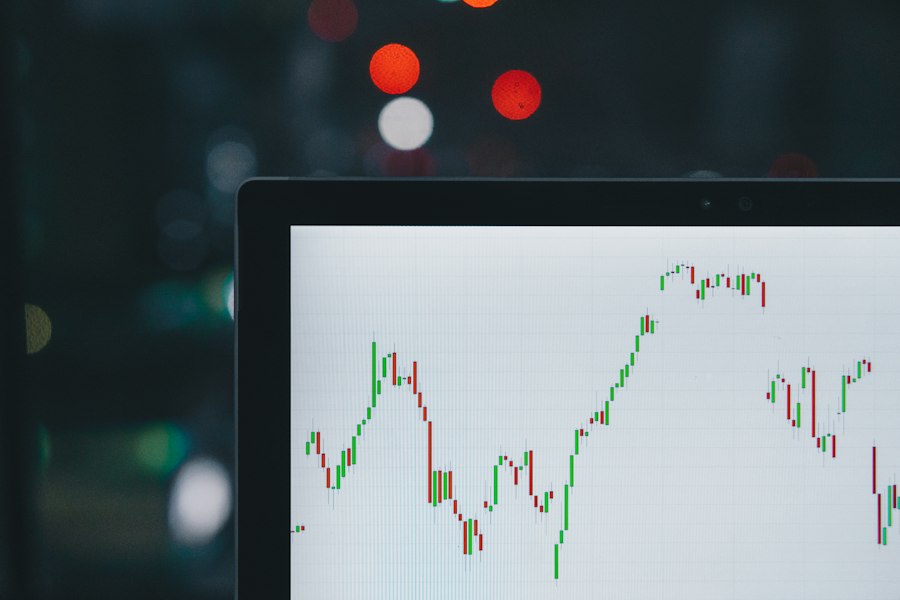
Gold’s break to all-time highs is the clearest market signal that reserve managers are no longer treating the U.S. dollar system as politically neutral plumbing. Lower real-rate expectations helped, but the more durable driver is official-sector demand: central banks have bought gold at the fastest pace in modern records just as geopolitical fragmentation has made reserve safety a board-level issue.
This is not a simple dollar-collapse story. The dollar still dominates global invoicing, cross-border debt and foreign-exchange reserves. But the marginal buyer of gold has changed. For two decades, the gold price was largely a function of U.S. real yields, ETF flows and the dollar index. Since 2022, that model has weakened because central banks, especially in emerging markets, have been accumulating physical bullion regardless of Western investor positioning.
What is driving gold to all-time highs?
Gold is being driven by a combination of persistent central bank buying, elevated geopolitical risk, expectations for lower U.S. real rates and constrained mine supply growth. The key shift is that official-sector demand has created a structural bid that is less sensitive to short-term price and yield volatility.
World Gold Council data show central banks bought 1,082 tonnes of gold in 2022, the largest annual total since records began, followed by another 1,037 tonnes in 2023. In the first quarter of 2024 alone, net central bank purchases reached 290 tonnes, the strongest first quarter on record. Those numbers matter because total annual mine supply is only about 3,600 tonnes, meaning official institutions have recently absorbed roughly a quarter to a third of fresh mine output.
The buying has also coincided with a market where Western gold ETFs were not the primary source of demand. In several periods during 2023 and early 2024, U.S. and European ETFs saw outflows even as the gold price made new highs. That divergence tells us the marginal price-setter was not the traditional macro fund buying GLD on a Federal Reserve pivot. It was physical demand from reserve managers, Chinese households, Turkish savers, Indian consumers and institutions seeking assets outside the liability chain of another government.
Real yields still matter. Gold has no coupon, so higher Treasury inflation-protected securities yields normally pressure the metal. But when gold rallies despite positive real yields, it is usually a sign that investors are paying for insurance rather than income. That is the environment we are in: war risk in Europe and the Middle East, fiscal deterioration in advanced economies, and a growing desire among non-Western governments to reduce exposure to sanctions and payment-system chokepoints.
How does central bank gold buying work?
Central banks buy gold to diversify reserves, strengthen balance sheets and hold an asset with no foreign issuer or default risk. Purchases are typically made through the London over-the-counter market, the Bank for International Settlements, domestic mine output, or direct transfers between official institutions.
The mechanics are important because central bank buying is not always visible in real time. Some purchases are reported monthly to the International Monetary Fund. Others appear with long lags, or are inferred from trade flows and domestic vault movements. China is the classic example: the People’s Bank of China reported an 18-month buying streak from late 2022 to April 2024, lifting official holdings by more than 300 tonnes to around 2,264 tonnes. Yet many analysts believe China’s true state-linked gold accumulation may be larger, because sovereign entities beyond the PBoC can hold metal outside the formal reserve line.
The largest recent buyers have been emerging-market central banks with high dollar exposure or acute balance-of-payments memories. China, Poland, Turkey, India, Singapore, Uzbekistan and the Czech Republic have all been notable accumulators. Poland’s central bank has explicitly discussed raising gold toward 20 percent of reserves over time. Turkey has used gold as a monetary anchor during periods of currency stress and negative real local rates. India has steadily increased bullion reserves while also promoting rupee trade settlement, though it remains pragmatic rather than ideological.
Gold also performs a different role from Treasuries. U.S. government bonds are liquid and yield-bearing, but they are someone else’s liability. Gold is liquid, globally accepted and politically inert once held in domestic vaults. For a central bank thinking in decades, that distinction matters more after Russia’s 2022 reserve freeze, when roughly $300 billion of Russian central bank assets were immobilized by Western governments. The lesson absorbed in Beijing, Riyadh, New Delhi and Ankara was not that Treasuries are unusable; it was that reserves can become conditional in an extreme geopolitical scenario.
Why does de-dollarization matter for gold traders?
De-dollarization matters because gold is the reserve asset that benefits when countries want diversification without taking another country’s credit risk. Even modest reallocations away from dollars can create large bullion demand because the gold market is small relative to global foreign-exchange reserves.
The dollar’s share of disclosed global FX reserves has declined from roughly 71 percent in 1999 to about 58 percent in recent IMF COFER data. That is a slow erosion, not a collapse. The euro, yen, sterling, Canadian dollar and Australian dollar have absorbed some of the shift. But for countries wary of the entire G7 financial architecture, switching from dollars to euros does not solve the sanctions problem. Gold does.
The scale effect is powerful. Global official reserves exceed $12 trillion, while the annual value of newly mined gold at a $2,300 price is roughly $265 billion. If central banks collectively shifted even 1 percent of reserves into gold over a multi-year period, that would represent about $120 billion of demand, equivalent to more than 1,600 tonnes at current price levels. That is larger than a normal year of central bank purchases before the post-2022 regime change.
For traders, the implication is that gold’s downside may be shallower than historical models imply. A decade ago, a 75 to 100 basis point rise in real yields would likely have triggered sustained liquidation. Today, dips are more likely to meet physical buying from central banks and Asian consumers. That does not eliminate corrections; gold can still fall sharply when the dollar squeezes funding markets. But it changes the risk-reward profile. The market now has a strategic bid below the tactical flows.
The de-dollarization thesis is often overstated in politics and understated in gold pricing. The dollar is not being replaced overnight, but the insurance premium against dollar weaponization is now embedded in bullion demand.
Is gold still cheap after record highs?
Gold is not cheap in nominal terms, but it is less stretched when measured against debt, money supply and geopolitical risk. The more relevant question is whether the official-sector bid can keep growing faster than mine supply and scrap response.
On a simple inflation-adjusted basis, the January 1980 gold peak near $850 per ounce equates to well above $3,000 in today’s dollars, depending on the inflation deflator used. That does not mean gold must reach that level, but it shows that a nominal record is not automatically a bubble. The macro backdrop is also different: U.S. federal debt is above $34 trillion, interest expense has risen sharply, and the fiscal deficit remains large even without a recession. Gold tends to benefit when investors lose confidence that real rates can stay high without damaging sovereign balance sheets.
Supply is another constraint. Global mine production has been broadly flat for years, with grades declining in mature districts and permitting timelines stretching beyond a decade in North America and Europe. New projects in West Africa, Latin America and Central Asia face higher political risk, power costs and financing hurdles. The gold industry can increase sustaining capital, but it cannot quickly deliver the type of supply response seen in shale oil. A new tier-one gold mine can take 10 to 15 years from discovery to production.
Scrap supply does rise at high prices, especially in India, Turkey and the Middle East, but recycling tends to be price elastic only up to a point. Households sell old jewelry when local prices spike, yet they also buy bullion when currencies weaken. In China, weak property returns and volatile equity markets have pushed households toward bars, coins and gold jewelry with investment characteristics. That domestic portfolio shift has made Shanghai premiums an important signal for global traders.
What could stop the gold rally?
The biggest risks to gold are a sustained rise in real yields, a stronger dollar liquidity squeeze, a collapse in physical demand, or central banks pausing purchases at high prices. Gold’s structural story is strong, but it is not immune to positioning, funding stress or policy surprises.
The first risk is a Federal Reserve that keeps policy tight longer than markets expect while inflation falls. If real yields rise and the dollar strengthens, leveraged gold longs can be forced out. The second risk is that Chinese demand cools. China has been central to the physical market through both official buying and retail investment. A stronger renminbi, improving property sentiment or tighter import quotas could reduce Shanghai premiums and pressure global prices.
The third risk is valuation fatigue among central banks. Official buyers are price insensitive compared with hedge funds, but not price blind. The PBoC’s reported pause in May 2024 after 18 months of additions was a reminder that central banks prefer to accumulate on weakness. If multiple large buyers step back simultaneously, the market could test how much Western investment demand is willing to chase at elevated levels.
Finally, peace dividends matter. A credible de-escalation in Ukraine, lower Middle East risk premium, and reduced U.S.-China tensions would not destroy the case for gold, but they would compress the geopolitical option value embedded in the price. That said, the probability of a full return to the pre-2022 reserve regime looks low. Once reserve managers identify confiscation risk, they rarely forget it.
How should investors think about gold from here?
Investors should treat gold less as a short-term inflation hedge and more as monetary insurance against fiscal stress, geopolitical fragmentation and reserve diversification. The strongest strategy is usually disciplined allocation, not chasing parabolic moves.
For multi-asset portfolios, gold’s role is clearest as a 5 to 10 percent strategic allocation, adjusted for risk tolerance and liquidity needs. Physical bullion and allocated storage reduce counterparty exposure. ETFs provide liquidity but reintroduce custodial and market-structure considerations. Gold miners offer operational leverage, but they are equities with cost inflation, jurisdictional risk and management execution risk. In recent cycles, bullion has outperformed many miners because diesel, labor, cyanide and sustaining capital costs have eaten into margins.
For traders, the key indicators are real yields, the dollar index, Shanghai gold premiums, central bank purchase data, ETF flows and options skew. A rally led by physical premiums and central bank buying is healthier than one driven entirely by futures leverage. Conversely, a record high accompanied by falling Asian premiums and aggressive speculative length should be treated with caution.
Silver and copper can also benefit from monetary easing and de-dollarization narratives, but gold is unique because it sits on central bank balance sheets. Copper is an industrial metal tied to China, grids and electrification. Silver is a hybrid with solar demand and retail monetary appeal. Gold is the only commodity that competes directly with sovereign reserves.
Bottom Line
Gold’s all-time highs are not merely a bet on Fed rate cuts; they reflect a structural repricing of reserve risk after sanctions, fiscal expansion and geopolitical fragmentation. Central bank buying above 1,000 tonnes annually has tightened the physical market and weakened the old relationship between gold and real yields.
The dollar remains the core of the global system, but reserve managers are building a hedge against its political use. That makes gold expensive, but not irrationally so, and it suggests that major pullbacks are more likely to be accumulated than abandoned.