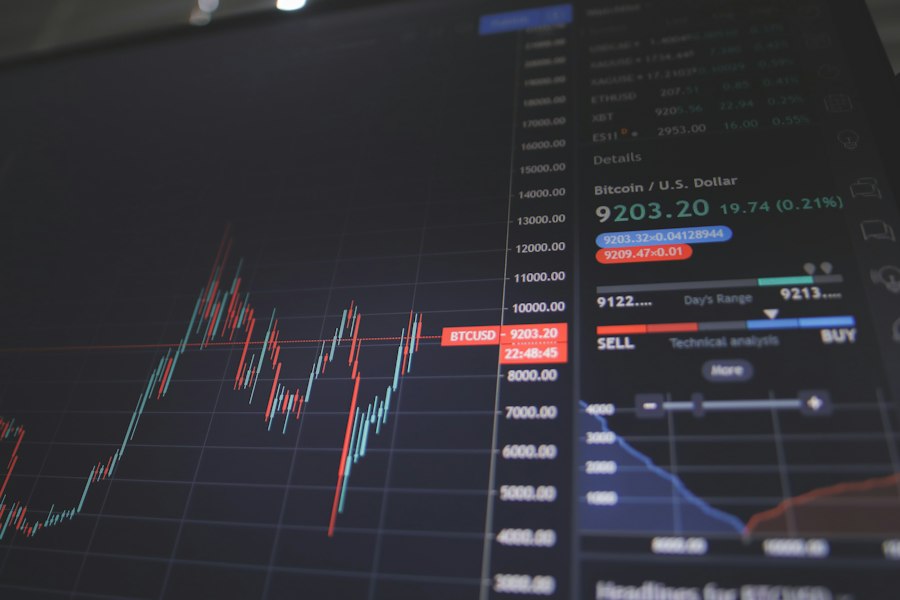
The foreign exchange market looks frictionless from a trading screen: EUR/USD flashes a one-tenth-of-a-pip spread, USD/JPY moves in milliseconds, and an emerging market currency can gap before London has finished breakfast. Underneath that surface is a segmented network where banks, hedge funds, real-money managers, corporates, high-frequency firms and retail brokers meet through different rules, credit lines and information advantages. Microstructure is not plumbing trivia; it is why the same dollar view can produce three different outcomes depending on whether it is executed through a top-tier dealer, an ECN sweep, a prime broker, or a retail platform.
The key point for investors is that FX prices are not discovered in a single exchange order book. They are negotiated across bilateral relationships, multilateral venues and internalized risk books. That structure matters most when central bank divergence is acute: a hawkish Federal Reserve, a cautious European Central Bank, a Bank of Japan exiting ultra-easy policy at a glacial pace, or an emerging market central bank defending reserves can all create flows that reveal themselves first in market depth, not in headline spot levels.
The FX Market Is a Credit Network, Not a Centralized Exchange
Global FX turnover reached $7.5 trillion per day in the BIS 2022 Triennial Survey, larger than global equities and many sovereign bond markets combined. But the composition is revealing: spot turnover was around $2.1 trillion, while FX swaps accounted for about $3.8 trillion. In other words, the largest part of FX is not speculative clicking on EUR/USD; it is balance-sheet transformation, funding and hedging across dates.
Unlike equities, there is no consolidated tape showing the true best bid and offer. The same currency pair can trade at slightly different prices across EBS, LSEG FX, Cboe FX, 360T, Bloomberg FXGO, single-bank platforms and retail broker engines. The difference is usually small in G10 pairs during liquid hours, but it widens in crosses, non-deliverable forwards and Asian currencies around local market closes.
Credit is the hidden price of entry. A hedge fund trading through prime brokerage may access multiple bank and non-bank liquidity streams, but its executable price depends on credit limits, margin, settlement risk and the prime broker's willingness to intermediate. A corporate hedging a $500 million receivable often receives a relationship price from a bank that reflects more than the market; it embeds balance sheet, ancillary business and the dealer's appetite for that currency exposure.
Geography also shapes liquidity. London still dominates with roughly 38% of global FX turnover, followed by the United States near 19%, Singapore at about 9%, Hong Kong near 7% and Japan around 4%. That distribution explains why EUR/USD and GBP/USD typically deepen into the London morning, while USD/JPY liquidity often behaves differently during Tokyo lunch, London overlap and the New York option cut.
Banks Still Make the Market, But They No Longer Own It
Major banks remain the core shock absorbers of FX. JPMorgan, Citi, UBS, Deutsche Bank, Goldman Sachs, Barclays and HSBC quote prices to clients, warehouse risk, stream liquidity to venues and manage settlement through systems such as CLS. They earn spreads, but the modern dealer business is also about information filtering: who is buying, how urgently, in what size, and whether that order is likely to continue.
Dealer pricing is increasingly algorithmic. A bank's EUR/USD stream to a macro fund can differ from the stream shown to a corporate treasurer or a retail aggregator because the expected toxicity of the flow differs. If a client repeatedly trades just before short-term price moves, the bank will widen spreads, reduce top-of-book size, apply last look more conservatively or route the flow to a different internal book. This is not simply discrimination; it is inventory management under milliseconds of adverse-selection risk.
Last look remains controversial because it allows a liquidity provider a brief window to accept or reject an incoming trade request. Supporters argue it enables tighter quoted spreads by protecting market makers from stale prices during fast markets. Critics argue it can transfer optionality from liquidity takers to banks. The practical lesson is straightforward: the quoted spread is not the realized cost. Fill ratios, reject rates and post-trade slippage are the real microstructure metrics.
Basel III capital rules also changed dealer behavior. Banks are less willing to warehouse large directional positions than before 2008, especially in less liquid currencies. That is one reason spot markets can feel deep in normal conditions but fragile around event risk. When U.S. CPI, payrolls, an FOMC decision or a surprise Bank of Japan operation hits, dealers often pull streaming size first and reprice second. The jump in USD/JPY after policy surprises is therefore not just a macro reaction; it is a balance-sheet reaction.
Funds Move Prices Through Execution Footprints
Hedge funds, CTAs, macro funds and real-money managers interact with FX differently. A CTA responding to a break in the 200-day moving average in USD/JPY may slice orders mechanically across venues. A discretionary macro fund may work a position through a bank voice desk to avoid signaling. A reserve manager or pension fund may hedge monthly exposure near a benchmark fixing. Each creates a different footprint.
The largest funds rarely show their full hand. They use execution algorithms such as TWAP, VWAP, liquidity-seeking and implementation-shortfall strategies. In liquid pairs, an algorithm may post passively on an ECN, hit multiple bank streams and dark-match internal flow through a prime broker. In emerging markets, the same order may need to be split between onshore liquidity, offshore NDFs and local banking relationships.
For macro traders, the actionable insight is that price impact often reveals positioning before futures data catches up. If EUR/USD rallies on modest news but top-of-book depth remains thin and offers replenish quickly, the move may be short covering rather than fresh real-money demand. If USD/MXN falls despite higher U.S. yields and local bid depth keeps rebuilding, that suggests carry investors are absorbing dollar demand, often through systematic or relative-value programs.
Carry trades add another layer. When volatility is low, leveraged investors borrow low-yielding currencies and buy high-yielding currencies: classic examples include funding in yen or Swiss francs and receiving yield in Mexican peso, Brazilian real, Indonesian rupiah or Hungarian forint. The trade looks macro, but the unwind is microstructural. As volatility rises, prime brokers raise margin, dealers reduce credit, stop-loss orders cluster, and liquid pairs such as USD/JPY become funding-release valves.
Retail Flow Is Large in Tickets, Small in Influence
Retail traders see a simplified version of FX. Platforms advertise tight spreads, high leverage and instant execution, but most retail flow is internalized by brokers rather than sent directly to the interbank market. In a principal model, the broker becomes the counterparty and manages net exposure internally. If retail clients are broadly balanced, the broker may not hedge every trade. If clients become one-sided, the broker hedges with a bank, prime-of-prime provider or liquidity aggregator.
This structure creates a paradox: retail is visible to brokers but usually invisible to the broader market until it must be hedged. A surge in retail long USD/JPY positions may not move interbank prices if internal offsetting is sufficient. But if the same flow becomes too one-sided during a BoJ headline or U.S. yield spike, broker hedging can add fuel to a move. The effect is more pronounced in gold, crypto-linked CFD products and smaller FX crosses than in EUR/USD.
Retail execution costs are often misunderstood. A zero-commission account can still pay through spread mark-up, asymmetric slippage, overnight financing and stop-out mechanics. With leverage of 30:1 in many regulated jurisdictions and higher in some offshore venues, a 1% move in the underlying currency can erase a substantial portion of margin. Microstructure matters because stop orders do not guarantee a price in a gap; they guarantee an instruction to trade when liquidity may be disappearing.
Retail traders do, however, contribute useful sentiment signals. Extreme client positioning data from large brokers often works as a contrarian indicator in trending markets. When retail repeatedly fades a rising USD/JPY trend driven by yield differentials, the pain trade can continue until either U.S.-Japan rate spreads compress or realized volatility forces institutional carry reduction.
Fixings, NDFs and the Asian Liquidity Clock
Some of the most important FX trades occur around benchmarks rather than news. The WM/Refinitiv 4 p.m. London fix is used by asset managers to value portfolios and rebalance hedges. Month-end equity and bond moves can create predictable FX demand: a strong U.S. equity month may require non-U.S. investors to sell dollars to rebalance hedges, while a sharp euro-area bond rally can generate the opposite effect. Banks pre-hedge these flows under strict conduct rules, but the market still watches fix windows for abnormal volume.
Asian and emerging market currencies add structural complexity. USD/CNH trades offshore with different liquidity and policy signaling than onshore USD/CNY. The People's Bank of China daily fixing can anchor expectations, but offshore markets express stress through CNH funding rates, forward points and option skew. In India, Korea, Taiwan and Indonesia, central banks may influence spot through state banks, moral suasion or reserve operations, while global funds often use NDFs to manage exposure when onshore access is restricted.
NDF microstructure is particularly important for EM investors. A USD/KRW or USD/INR NDF is cash-settled, usually in dollars, and references a fixing rather than delivering local currency. Liquidity is concentrated in offshore hubs such as Singapore, London and New York. During stress, NDFs can lead onshore spot because they are easier for global macro funds to trade, but the basis between offshore and onshore pricing can widen sharply when local authorities push back.
Settlement risk is another underappreciated channel. CLS mitigates payment-versus-payment risk in major currencies, but not every currency or product is covered. When funding markets tighten, FX swaps become the first place stress appears. Cross-currency basis, forward points and tom-next rates can move before spot breaks, which is why dollar funding pressure often shows up in USD/JPY forwards or EUR/USD basis before it appears in broad dollar indices.
How to Read the Market Like a Microstructure Strategist
The practical framework is to separate direction, liquidity and positioning. Direction comes from macro drivers such as rate differentials, current accounts, commodity terms of trade and central bank reaction functions. Liquidity comes from venue depth, time zone, fix windows, option expiries and dealer balance sheet. Positioning comes from futures data, prime broker color, retail sentiment, carry exposure and price behavior around obvious levels.
- Watch realized execution, not quoted spreads: a one-pip spread with repeated rejects is worse than a wider executable price.
- Respect the clock: Tokyo lunch, London open, New York data releases and the 4 p.m. fix each have different liquidity regimes.
- Use forwards as stress indicators: FX swap points and cross-currency basis often flag funding pressure before spot markets acknowledge it.
- Treat EM spot and NDFs as related but not identical: policy controls, local holidays and offshore dollar liquidity can drive temporary dislocations.
- Do not ignore dealer inventory: fast reversals after data often reflect liquidity providers reducing risk, not a clean macro reassessment.
The next phase of FX microstructure will be shaped by three forces: further electronification of relationship trading, tighter scrutiny of execution quality, and the growing role of non-bank market makers. Machine-learning execution tools will improve order slicing, but they will not eliminate the core hierarchy of credit and balance sheet. In fact, as more participants use similar algorithms, liquidity may look deeper in calm periods and vanish faster during shocks.
Forex is the purest expression of global macro, but it trades through a market structure built on credit, latency and trust. The trader who understands that plumbing will often understand the price action before the economist does.
For investors navigating dollar cycles, yen carry trades and emerging market currency risk, microstructure is not a niche specialty. It is the bridge between a correct macro thesis and a profitable execution. In a world where central banks are no longer moving in lockstep, the winners in FX will be those who know not only what to trade, but where, when and through whom to trade it.