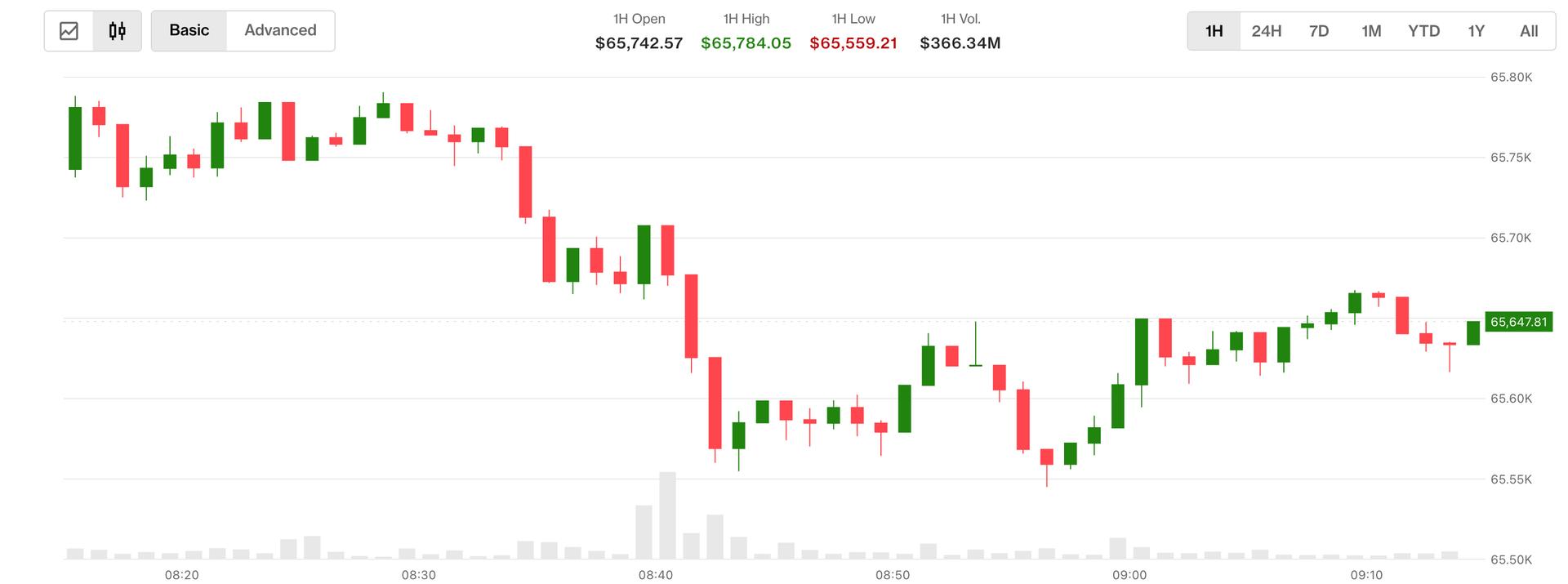
Why is Bitcoin falling alongside oil and rising rates?
Bitcoin is under pressure because the macro backdrop has turned less friendly for risk assets. Higher oil prices can reignite inflation fears, while rising interest rates lift real yields and strengthen the case for holding cash or Treasurys instead of speculative assets like crypto.
That combination matters because Bitcoin has increasingly traded like a high-beta macro asset rather than a pure alternative currency. When investors worry about persistent inflation and tighter financial conditions at the same time, they tend to reduce exposure to assets whose valuations depend heavily on future liquidity.
What does the Clarity Act odds drop to 38% mean for crypto?
A lower probability of market structure reform is a setback for one of crypto’s biggest policy hopes. If traders believe the Clarity Act has only a 38% chance of advancing, that suggests the market is pricing in a longer period of regulatory uncertainty for exchanges, token issuers, and decentralized finance platforms.
For Bitcoin specifically, the bill is not about changing the network itself. But it still matters because clearer rules for the broader industry can improve institutional participation, reduce enforcement risk, and support valuation multiples across the sector.
How do oil prices and interest rates affect Bitcoin trading?
Higher oil and higher rates usually hit crypto through the same channel: tighter liquidity. If energy costs rise, inflation expectations can rebound, which may keep central banks cautious. That can delay rate cuts, support the dollar, and pressure speculative assets.
Bitcoin often benefits when markets expect easier policy and abundant liquidity. The reverse is also true. A more restrictive environment tends to compress risk appetite, reduce leverage, and trigger de-risking across crypto futures, altcoins, and related equities.
- Oil up can mean inflation stays sticky longer.
- Rates up raise the cost of capital and strengthen the appeal of yield-bearing assets.
- Crypto down often follows when traders unwind leveraged positions.
Why does this matter for traders right now?
The current setup combines macro headwinds and political uncertainty, which is usually a difficult mix for digital assets. Bitcoin’s decline is not being driven by one single factor; it reflects a convergence of cross-asset stress, weaker policy optimism, and a risk-off tone in markets.
That makes the next few sessions particularly important for positioning. If Treasury yields continue to climb and crude stays elevated, Bitcoin could remain vulnerable to further downside, especially if ETF inflows slow or leverage in derivatives markets remains elevated.
At the same time, a sharp market overreaction is possible if traders are already heavily hedged. Bitcoin has a history of overshooting in both directions, so short-term price action may become more volatile as macro headlines stack up.
What happens if Clarity Act momentum fades further?
If support for the Clarity Act weakens, the market may interpret that as a sign that comprehensive crypto legislation will take longer to materialize. In practical terms, that could keep U.S.-based projects and exchanges operating under a patchwork of enforcement-led regulation rather than a cleaner statutory framework.
For investors, that raises three immediate risks: slower institutional adoption, more compliance expense, and continued uncertainty around which tokens may be treated as securities. Those factors can weigh more heavily on altcoins than on Bitcoin, but they also affect broader sentiment across the market.
- Institutional allocation may stay cautious without clearer rules.
- Altcoins can underperform as regulatory ambiguity persists.
- Market narratives may shift back toward Bitcoin as the relative safe haven in crypto.
How should investors interpret Bitcoin’s weakness?
Bitcoin’s pullback should be read as a reminder that crypto is still highly sensitive to macro conditions. The asset may have long-term structural support from scarcity and adoption, but in the short run it trades on liquidity, sentiment, and expectations about policy.
Investors should watch three variables closely: Treasury yields, crude oil, and regulatory probabilities. If yields keep rising while the odds of legislative clarity fall, Bitcoin may struggle to attract incremental buyers until a better risk environment emerges.
Still, weakness in the market structure narrative does not erase Bitcoin’s fundamental role in the asset class. If anything, it may reinforce the gap between Bitcoin’s relative simplicity and the more legally exposed segments of the crypto market. In a period of uncertainty, that distinction can matter as much as price momentum.
Bottom Line
Bitcoin is being squeezed by a familiar but powerful combination: tighter macro conditions and fading regulatory optimism. Rising oil and rates are pressuring risk appetite, while the drop in Clarity Act odds to 38% signals that crypto policy progress may take longer than investors hoped.
For traders, the key question is whether this is a temporary reset or the start of a broader de-risking phase. Until yields stabilize and political clarity improves, Bitcoin may continue to trade defensively relative to earlier in the cycle.