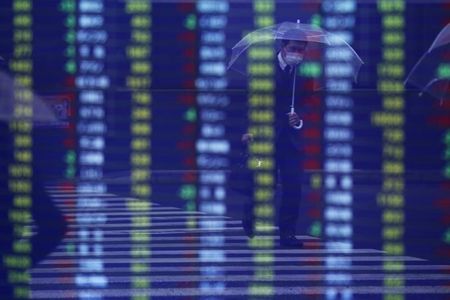
Asia Rallies Into a High-Stakes Fed Moment
Asian equities pushed higher as investors leaned back into risk, with Japan’s Nikkei 225 trading close to record territory and broader regional markets benefiting from improved sentiment ahead of the Federal Reserve’s policy decision. The move reflects a familiar but powerful mix: resilient corporate earnings, hopes for easier global financial conditions, a still-supportive currency backdrop for Japanese exporters, and investor confidence that the worst of the global tightening cycle is behind us.
Yet the rally is not simply about Asia. It is also about the global cost of capital. The Fed’s decision, and more importantly its forward guidance, will determine whether this risk-on tone has room to extend or whether investors are once again forced to reassess valuations across equities, credit, crypto, and emerging markets.
For now, markets are acting as though the Fed will avoid a hawkish surprise. That assumption has helped lift Asian stocks, compress volatility, and support momentum trades. But when indexes are already near historic highs, the margin for disappointment becomes thin.
Why Japan Remains the Regional Standout
Japan has been one of the clearest equity success stories in global markets. The Nikkei’s approach toward record highs is not just a short-term trading phenomenon; it reflects several structural forces that have changed how international investors view Japanese assets.
First, corporate governance reform continues to unlock shareholder value. Japanese companies have been under pressure to improve return on equity, reduce cross-shareholdings, increase buybacks, and use balance sheets more efficiently. For global investors who long viewed Japan as a low-return market, that is a major change.
Second, the currency backdrop has remained favorable. A weaker or relatively contained yen tends to support Japan’s large exporters by boosting overseas earnings when converted back into yen. Automakers, electronics firms, machinery producers, and industrial names often benefit from this dynamic, especially when global demand is steady.
Third, Japan offers something scarce in developed markets: a combination of reflation, wage growth, and still-cautious monetary normalization. The Bank of Japan has moved away from the most extreme forms of ultra-loose policy, but it has done so gradually. That reduces the risk of a sudden shock to domestic financial conditions.
Finally, global allocators have been diversifying away from overconcentrated U.S. equity exposure. With U.S. mega-cap technology stocks commanding premium valuations, Japan has attracted capital as a liquid alternative with improving fundamentals and strong index momentum.
The Fed Decision Is the Global Liquidity Anchor
Although Asian markets are rallying locally, the Fed remains the central actor for global risk assets. U.S. monetary policy influences the dollar, Treasury yields, global funding conditions, and the discount rates used to value future earnings. That makes the upcoming decision much more important than the headline rate announcement alone.
Investors will focus on three elements:
- The policy statement: Any change in language around inflation, labor-market cooling, or growth risks will shape expectations for future rate moves.
- The dot plot or rate projections: Markets will compare policymakers’ expected path for rates with current pricing in futures markets.
- The press conference tone: A cautious, data-dependent Fed can support risk assets; a renewed inflation warning could tighten financial conditions quickly.
The key issue is whether the Fed validates market expectations for eventual easing or pushes back against premature optimism. If inflation remains sticky, especially in services, policymakers may prefer to keep rates higher for longer. If labor data show clearer signs of cooling, the Fed may signal more comfort with a gradual shift toward cuts.
For Asian equities, the difference is significant. A dovish Fed tends to weaken the dollar, ease pressure on emerging-market currencies, lower global bond yields, and support capital flows into non-U.S. assets. A hawkish Fed can do the opposite: strengthen the dollar, lift real yields, and pressure risk assets across the region.
Regional Markets Benefit, but Not Equally
The broader Asian rally is not uniform. Japan’s strength is driven by governance reform, earnings momentum, and foreign inflows. Other markets are more sensitive to China’s demand cycle, semiconductor exports, domestic consumption, or currency stability.
Technology-heavy markets in South Korea and Taiwan remain tied to the global artificial intelligence and semiconductor investment cycle. Demand for advanced chips, memory, servers, and related supply-chain components has created a powerful earnings tailwind. If global growth holds and U.S. yields decline, these markets can continue to attract capital.
China-linked equities face a more complicated environment. Investors remain concerned about property-sector weakness, uneven consumer confidence, and the need for more forceful policy support. While valuations in parts of China and Hong Kong are low, low valuations alone rarely create a durable rally without improving earnings visibility and stronger domestic demand.
India and parts of Southeast Asia sit somewhere in between. They benefit from long-term growth stories, supply-chain diversification, and favorable demographics, but valuations in some pockets are already demanding. For these markets, Fed policy matters because foreign portfolio flows can quickly swing depending on U.S. yields and dollar strength.
What Bond and Currency Markets Are Signaling
Equity rallies are easier to trust when bond and currency markets confirm the story. In this case, investors are watching U.S. Treasury yields, the dollar index, and the yen closely.
If Treasury yields drift lower after the Fed decision, it would support the idea that financial conditions are easing and that equity valuations can remain elevated. That would be constructive for growth stocks, exporters, and higher-duration assets such as technology shares.
The yen is more complex. A weak yen supports Japanese exporters but can also raise import costs and pressure households through higher prices for energy and food. If the yen weakens too far, policymakers may become uncomfortable. On the other hand, a sharp yen rebound could hurt exporter earnings expectations and trigger profit-taking in Japanese equities.
For emerging Asia, a softer dollar is generally helpful. It reduces pressure on central banks to defend currencies, lowers external financing stress, and can encourage global investors to seek higher returns outside the U.S. That is why the Fed’s communication matters so much: it can either extend the liquidity tailwind or abruptly reverse it.
Implications for Crypto and DeFi Investors
For DeFi Panda readers, the equity move is relevant beyond traditional portfolios. Crypto markets are increasingly sensitive to the same macro variables driving Asian equities: dollar liquidity, real yields, risk appetite, and expectations for central-bank easing.
A benign Fed outcome could support Bitcoin, Ethereum, and higher-beta digital assets by lowering the opportunity cost of holding non-yielding or speculative assets. It could also improve sentiment across DeFi tokens, especially if liquidity conditions loosen and stablecoin supply expands. Historically, crypto tends to perform better when investors expect easier monetary policy and weaker dollar conditions.
However, the reverse is also true. A hawkish Fed that lifts real yields could pressure crypto alongside equities. In that scenario, leveraged positions may become vulnerable, funding rates could reset, and liquidity may concentrate in larger, more established tokens rather than smaller altcoins.
The important point is that crypto no longer trades in isolation. When the Nikkei is near records and Asian equities are rallying, it reflects a broader global risk cycle. DeFi investors should monitor macro signals just as closely as on-chain data.
Risks Behind the Rally
Despite the upbeat tone, investors should not ignore the risks. Equity markets near record highs can continue climbing, but they also become more vulnerable to disappointment.
- Fed hawkishness: If policymakers signal fewer cuts or renewed inflation concern, risk assets could reprice quickly.
- Yen volatility: A sudden currency reversal could pressure Japanese exporters and unwind popular trades.
- China weakness: Any deterioration in Chinese growth expectations would weigh on regional sentiment.
- Valuation risk: Strong markets can become crowded, especially when momentum attracts short-term capital.
- Geopolitical shocks: Energy prices, trade tensions, or regional security concerns could disrupt the current risk-on narrative.
Investors should also remember that central banks may not deliver the speed or scale of easing that markets hope for. Inflation has moderated from prior peaks, but policymakers remain cautious about declaring victory too early. That creates a gap between market optimism and central-bank patience.
Bottom Line
Asian stocks are rising because investors see a supportive combination of earnings strength, improving global liquidity expectations, and powerful regional themes. Japan remains the standout, with the Nikkei near record highs thanks to corporate reform, exporter strength, and sustained foreign interest.
But the Fed decision is the real macro catalyst. A dovish or balanced message could extend the rally across Asian equities, emerging markets, and crypto. A hawkish surprise could strengthen the dollar, lift yields, and trigger a broader risk reset.
For investors, the key is not to chase the headline blindly. The rally has fundamental support, particularly in Japan, but markets are already pricing in a favorable policy path. The next move depends on whether the Fed confirms that optimism or reminds investors that the battle against inflation is not yet fully over.