Asia’s Risk-Off Session Has a Clear Message
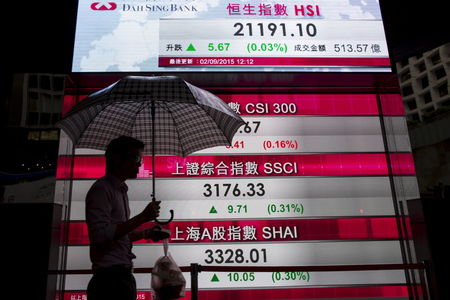
Asian equities slipped as investors looked past Samsung Electronics’ blockbuster earnings and focused instead on a more uncomfortable question: how much future artificial intelligence growth is already priced into the market? The move was not simply a reaction to one company or one index. It reflected a broader reset in risk appetite across technology-heavy markets where semiconductor, hardware, and data-center supply chain stocks have enjoyed a powerful multi-year rally.
The irony is that Samsung’s update was exactly the kind of news AI bulls normally want to see. Strong memory demand, healthier chip pricing, and accelerating orders linked to AI servers all point to an industry upcycle with real earnings behind it. Yet markets often turn when good news stops generating good price action. Tuesday’s weakness suggested investors are no longer asking whether AI demand is real. They are asking whether valuations already assume near-perfect execution.
Samsung Delivered the Fundamental Signal Bulls Wanted
Samsung’s earnings strength underscores the dramatic recovery in the memory semiconductor cycle. After a deep downturn marked by excess inventories and weak consumer electronics demand, the industry has been lifted by rising prices for DRAM and NAND, tighter supply discipline, and intense demand for high-bandwidth memory, or HBM, used in advanced AI accelerators.
For Samsung, the read-through is significant. The company has long been one of the world’s most important memory suppliers, but the AI boom has changed the quality of demand. Traditional memory cycles were heavily tied to smartphones, PCs, and general servers. AI infrastructure, by contrast, requires enormous memory density and bandwidth, creating premium pricing opportunities for suppliers that can meet advanced specifications.
That is why Samsung’s strong earnings matter beyond Korea. They confirm that the AI buildout is flowing through to real revenue and profits across the supply chain. It is not only the GPU designers that benefit. Memory makers, chip equipment firms, substrate suppliers, power management companies, cooling specialists, and advanced packaging providers all sit inside the same capital spending wave.
Why Great Earnings Did Not Lift the Market
The problem is that financial markets discount the future, not the present. By the time earnings visibly improve, stock prices may have already moved far ahead of fundamentals. In recent quarters, investors have aggressively bid up AI-linked equities across Asia, particularly in Taiwan, South Korea, and Japan. The rally has been supported by rising earnings estimates, but also by a growing belief that AI infrastructure spending will remain strong for years.
That belief is now being tested. Valuation concerns tend to emerge when three conditions appear at the same time: high expectations, crowded positioning, and limited tolerance for disappointment. AI stocks currently face all three. Many leading semiconductor names trade at multiples that imply sustained revenue growth, elevated margins, and continued capital spending by cloud giants. If any part of that equation weakens, the downside can be sharp.
There is also a timing issue. AI investment is happening at a furious pace, but monetization remains uneven. Hyperscalers and large technology platforms are spending heavily on chips, data centers, networking, and energy capacity. Investors increasingly want evidence that these investments will produce attractive returns rather than merely create a capex arms race. When that question becomes louder, even strong supplier earnings can be treated as confirmation of peak enthusiasm rather than a fresh catalyst.
The Valuation Problem in AI Hardware
The semiconductor sector has always been cyclical, and that history still matters. Memory chips are especially sensitive to supply-demand swings. When supply is tight, earnings can surge rapidly. When capacity catches up or demand slows, pricing can deteriorate just as quickly. Investors paying premium multiples for memory exposure are implicitly assuming that AI demand will smooth out a cycle that has historically been volatile.
That may be partially true. AI servers require more memory content than traditional servers, and HBM is technically difficult to manufacture at scale. These factors could support a more durable profit pool for industry leaders. However, durability is not the same as immunity. If customers over-order, if new capacity arrives faster than expected, or if AI accelerator demand pauses after a major deployment wave, margins could normalize.
This is the core tension in the market. Samsung’s results suggest the current earnings cycle is strong. The selloff suggests investors are worried the market is valuing the sector as if strength will persist indefinitely. For long-term shareholders, that distinction is critical.
Regional Markets Feel the AI Rotation
Asia is particularly exposed to AI valuation shifts because the region contains much of the world’s semiconductor manufacturing, testing, assembly, and electronics supply chain. South Korea’s market is heavily influenced by Samsung and SK Hynix. Taiwan’s benchmark is deeply tied to advanced chip manufacturing and AI server components. Japan has major exposure through semiconductor equipment, precision materials, factory automation, and electronics exports.
When investors reduce AI risk, the impact can ripple quickly across regional indices. A pullback in chip leaders can weigh on benchmarks even if domestic economic data remains stable. That is why a single theme can dominate an entire trading session. In Asia, AI is no longer a niche growth story; it is a major driver of index performance, earnings revisions, currency sensitivity, and foreign investor flows.
Broader macro conditions add another layer. Higher global bond yields can pressure long-duration growth stocks because more of their value depends on future profits. A stronger U.S. dollar can tighten financial conditions for emerging Asian markets. Meanwhile, uncertainty around Chinese consumption and industrial demand continues to weigh on sentiment outside the AI complex. In that environment, investors may be quicker to lock in gains when valuations look stretched.
What Retail Investors Should Watch Next
For investors, the key is not to confuse a valuation reset with a collapse in the AI thesis. The AI infrastructure cycle remains powerful, but stock selection and entry price matter more as the theme matures. The next phase will likely reward companies that convert demand into free cash flow, defend margins, and avoid excessive capacity expansion.
- Memory pricing trends: Sustained DRAM, NAND, and HBM price increases would support earnings estimates for Samsung and peers.
- Capex guidance from cloud giants: If major technology platforms keep raising data-center budgets, AI suppliers may retain momentum.
- Order visibility: Long-term supply agreements and confirmed HBM qualifications are more valuable than vague AI exposure.
- Margin quality: Investors should distinguish between revenue growth driven by premium products and growth driven by cyclical price rebounds.
- Valuation discipline: Even excellent companies can deliver poor returns if bought at euphoric prices.
- Breadth of the rally: A healthy market should see earnings strength beyond a narrow group of AI hardware names.
Portfolio Implications
For educated retail investors, the lesson is to treat AI as a structural theme but not a one-way trade. A sensible approach may include a mix of core holdings in high-quality semiconductor leaders, selective exposure to beneficiaries with improving earnings revisions, and cash or defensive assets to take advantage of volatility. Chasing parabolic moves after strong earnings can be dangerous when expectations are already elevated.
Investors should also be cautious about assuming that every company with AI exposure deserves an AI multiple. The market is becoming more discriminating. Firms with genuine technological advantages, supply constraints, customer concentration benefits, and pricing power should trade at premiums. Companies with marginal exposure or highly cyclical earnings should not be valued as if they are software-like compounders.
Bottom Line
Asia’s stock market weakness despite Samsung’s blockbuster earnings is a classic sign of a maturing investment theme. The fundamentals of AI infrastructure remain strong, and Samsung’s results reinforce the recovery in memory and advanced semiconductor demand. But markets are now questioning whether valuations have run too far ahead of profits.
For investors, the message is balanced: AI is still real, but price matters again. The next winners will not simply be the companies attached to the AI narrative. They will be the businesses that prove they can turn that narrative into durable earnings, disciplined capital allocation, and returns that justify elevated expectations.