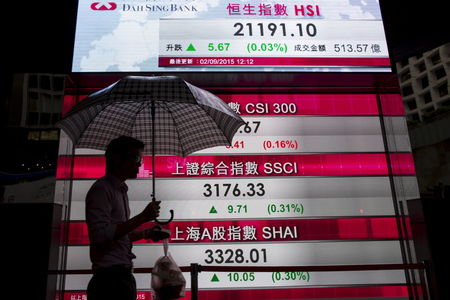
Asian equity markets extended losses on Tuesday as a sharp rise in oil prices revived the inflation trade just as investors prepared for the latest US consumer price index report. The combination is uncomfortable for risk assets: dearer energy can squeeze consumers, pressure corporate margins, lift inflation expectations and make central banks less willing to ease financial conditions.
The selloff matters because Asia is highly exposed to imported energy. Japan, South Korea, Taiwan and India rely heavily on foreign crude and liquefied natural gas, while China remains the world’s largest crude importer. When oil rises quickly, the region absorbs the shock through wider import bills, weaker currencies, higher transport costs and thinner profit margins for airlines, manufacturers, chemicals producers and consumer companies.
For global markets, the timing is especially sensitive. The US CPI report can either validate the bond market’s fear that inflation is re-accelerating or reassure investors that the disinflation trend remains intact. Until that number lands, traders are reducing exposure to cyclical equities and high-beta assets, while watching oil, the dollar and Treasury yields for clues about the next macro regime.
Why are Asia stocks falling as oil prices rise?
Asia stocks are falling because higher oil prices raise inflation risk, hurt energy-importing economies and reduce the odds of near-term monetary easing. The pressure is strongest when oil rises before a major US inflation report, because investors must price both weaker growth and potentially tighter policy.
Oil is not just another commodity for Asian markets. It is a core input into transportation, petrochemicals, shipping, fertilizers, plastics, electricity generation in some economies and household fuel costs. Even when governments cap retail prices or use subsidies, the cost still appears somewhere: in public finances, corporate margins or currency weakness.
A useful rule of thumb is that a sustained $10 per barrel increase in crude can add roughly 0.2 to 0.4 percentage points to headline inflation in major advanced economies, with the impact often larger for emerging markets where energy and food carry heavier weights in consumer baskets. The first-round effect is visible in gasoline and diesel. The second-round effect appears later through freight, airfares, food distribution and manufacturing costs.
Equities dislike this mix because it creates a negative terms-of-trade shock for oil importers. Energy producers benefit, but most listed Asian sectors are not pure oil winners. Exporters may face higher input costs; domestic consumer stocks may face weaker purchasing power; banks may face a more complicated rate path. That is why broad indices can fall even when a handful of energy names outperform.
The currency channel is also important. Higher oil prices typically increase demand for dollars because crude is priced globally in USD. If local currencies weaken at the same time, the effective oil price in domestic terms rises even more. For economies already dealing with soft household demand or fragile property sectors, an imported inflation shock can be particularly damaging.
What is the US CPI report and why does it matter for traders?
The US CPI report measures monthly changes in consumer prices and is one of the most important inputs for Federal Reserve policy expectations. Traders care because a hotter-than-expected CPI can push yields and the dollar higher, while a softer reading can support equities, crypto and emerging-market assets.
The market’s focus is usually split between headline CPI and core CPI. Headline CPI includes food and energy, making it more sensitive to the oil surge. Core CPI strips those categories out and is viewed as a better signal of underlying inflation pressure. However, markets cannot ignore headline inflation when energy prices are rising quickly, because households and businesses experience the full price level, not the statistical core.
For the Federal Reserve, the key question is whether inflation is moving sustainably toward its 2% target. If CPI shows sticky shelter costs, firm services inflation and rising energy prices, policymakers have less room to signal rate cuts. If CPI cools despite higher oil, investors may conclude that demand is slowing enough to keep disinflation alive.
The response across assets can be fast. A CPI upside surprise often lifts US Treasury yields, strengthens the dollar, pressures gold if real yields rise, and weighs on growth equities whose valuations depend on lower discount rates. It can also hit Bitcoin and crypto markets because liquidity expectations are central to speculative risk appetite. A downside surprise tends to do the opposite, especially if it lowers expected policy rates without implying a recession.
For Asia, the US CPI report matters through two channels. First, US rates influence global capital flows. Higher US yields can pull money away from emerging markets and pressure Asian currencies. Second, the dollar is the pricing benchmark for energy and many commodities. A stronger dollar plus higher oil is a double hit for importers.
How does an oil shock move inflation, rates and currencies?
An oil shock raises inflation directly through fuel prices and indirectly through transportation, production and food costs. It can also strengthen the dollar, lift bond yields and force central banks to prioritize inflation control over growth support.
The direct inflation effect is immediate. Gasoline, diesel, jet fuel and heating costs respond quickly to crude and refined product prices. The indirect effect takes longer but can be more persistent if companies pass higher costs to consumers. Airlines add fuel surcharges, logistics firms raise freight rates, farmers pay more for diesel and fertilizer, and retailers protect margins by raising shelf prices.
Central banks usually look through temporary energy shocks, but they cannot ignore them if inflation expectations rise or if wage negotiations begin to reflect higher living costs. This is the difference between a one-off price-level adjustment and an inflationary process. The latter is what policymakers fear.
Currency markets amplify the impact. Oil importers must buy dollars to pay for crude, while investors often seek the dollar during inflation scares. If Asian currencies depreciate, local central banks may face a dilemma: cut rates to support growth, or keep policy tight to defend currencies and contain imported inflation. That tension can weigh on equity valuations.
There are also fiscal consequences. Some governments may absorb part of the oil shock through subsidies, tax cuts or fuel-price smoothing mechanisms. That can protect consumers in the short run, but it widens fiscal deficits and may reduce investor confidence if debt levels are already high. India and Indonesia, for example, have historically had to balance fuel affordability against budget discipline during oil spikes.
Which markets are most exposed to the oil-driven inflation trade?
The most exposed markets are energy-importing economies, rate-sensitive equities, consumer discretionary stocks and high-beta assets that depend on easy liquidity. Beneficiaries are typically oil producers, some energy equities, selected commodity currencies and inflation-hedging trades.
In Asia, Japan is sensitive because a weaker yen makes imported energy more expensive and can complicate the Bank of Japan’s policy path. South Korea and Taiwan are exposed through energy-intensive manufacturing and semiconductor supply chains. India is exposed through its current account, inflation basket and fuel demand, even though its domestic growth story remains structurally strong. China faces a different problem: higher energy costs can squeeze industrial margins at a time when domestic demand and property activity remain uneven.
Sector performance usually becomes more defensive during this kind of shock. Investors tend to prefer companies with pricing power, strong balance sheets and lower energy intensity. Utilities may not always benefit because fuel costs can be regulated or politically sensitive. Airlines, logistics, autos, chemicals and consumer discretionary names often lag when oil rises quickly.
For crypto, the link is indirect but powerful. Bitcoin is not priced off gasoline, but it is highly sensitive to liquidity, real yields and the dollar. If oil lifts inflation expectations and delays rate cuts, crypto liquidity conditions tighten. If CPI comes in benign and oil is viewed as a temporary supply shock, digital assets can rebound quickly as risk appetite returns.
- Hot CPI plus rising oil: negative for equities, crypto and emerging-market FX; supportive for yields and the dollar.
- Cool CPI despite rising oil: supportive for risk assets if investors believe the Fed can still ease later.
- Oil reversal after CPI: could trigger a relief rally in Asia, especially in import-heavy markets.
- Oil keeps climbing: raises stagflation risk, where growth slows but inflation remains too high for comfort.
What should investors watch next?
Investors should watch the CPI details, oil futures, the US dollar, Treasury yields and Asian currency moves rather than focusing only on headline equity indices. The strongest signal will come from whether inflation fears broaden beyond energy into core prices and rate expectations.
The CPI internals matter. Shelter, medical services, insurance, transportation services and core goods will show whether inflation pressure is broadening. Energy will affect headline CPI, but the Fed will be more alarmed if core services remain firm. Markets will also scrutinize month-over-month momentum, because annual inflation can be distorted by base effects.
In rates, the 2-year Treasury yield is especially important because it reflects expected Fed policy. If it jumps after CPI, markets are pricing fewer cuts or a higher-for-longer path. The 10-year yield matters for equity valuations and global financial conditions. A simultaneous rise in both yields and oil is one of the more difficult combinations for risk assets.
In Asia, currency stability is the key stress test. If the yen, won, rupee or yuan weaken sharply, central banks may become more cautious. Equity investors should also watch earnings guidance from energy-sensitive companies. Management commentary on freight, fuel, hedging and pricing power will reveal whether the oil shock is becoming a margin problem.
The broader macro question is whether this is a temporary supply squeeze or the start of a more persistent inflation impulse. If oil’s move is geopolitical or supply-driven and fades, markets may recover quickly. If demand remains strong while supply stays tight, the inflation premium can remain embedded in bonds, currencies and equity valuations for longer.
Key Takeaway
Asia’s stock losses reflect a classic macro squeeze: higher oil raises inflation risk just as investors await a decisive US CPI print. The outcome will shape expectations for Fed policy, the dollar, Asian currencies, equities and crypto liquidity.
If CPI is hot, markets may price a more restrictive policy path and extend the risk-off move. If inflation cools despite the oil surge, the selloff could stabilize, but energy-importing Asia will remain vulnerable as long as crude prices stay elevated.