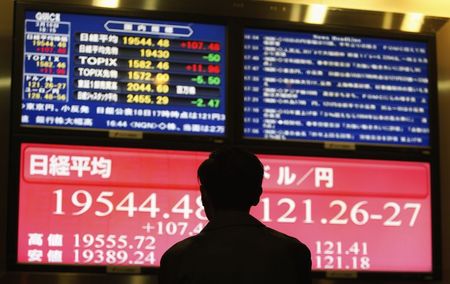
AI Euphoria Meets a Reality Check
Asian equities came under pressure on Tuesday as the market’s most crowded trade — artificial intelligence and the semiconductor supply chain — lost momentum. The sharpest pain was in South Korea, where chipmakers and hardware exporters dragged the broader market lower as investors reassessed whether the recent surge in AI-linked valuations had moved too far ahead of earnings, cash flows, and the global rate backdrop.
The move matters beyond regional equity screens. Asia’s chip complex has become one of the clearest barometers of global risk appetite. When investors are confident about AI spending, memory pricing, cloud capex, and data-center demand, capital tends to flow into Korea, Taiwan, Japan, and related currencies. When that confidence wobbles, the reversal can quickly spill into foreign exchange, bond markets, and commodity sentiment.
This session was not simply about one weak stock market. It was a broader cooling of speculative appetite after a powerful rally in AI beneficiaries. The question for investors now is whether this is a healthy correction in a still-strong structural theme, or the first sign that markets are becoming less willing to pay premium multiples for future growth.
Why Korea Took the Biggest Hit
South Korea is especially exposed to the semiconductor cycle. Its equity benchmark is heavily weighted toward memory chips, electronics, battery suppliers, and exporters tied to global manufacturing demand. When investors sell the AI trade, Korea can become a high-beta expression of that unwind.
The pressure on Korean chip names reflects several concerns. First, the market has already priced in a strong recovery in high-bandwidth memory, advanced packaging, and AI server demand. Second, investors are watching whether margins can keep improving as capacity expands. Third, global tech valuations have become sensitive to even small changes in rate expectations. A higher discount rate reduces the present value of long-duration growth stocks, and AI leaders are among the longest-duration assets in public markets.
For Korea, the equity selloff also feeds directly into the currency market. The Korean won often weakens when foreign investors reduce exposure to local equities, particularly when the selling is concentrated in export-heavy sectors. A softer won can help exporters over time, but in the short run it may amplify foreign investor caution because currency losses reduce total returns for dollar-based portfolios.
The Forex Angle: Risk-Off Flows Favor the Dollar and Yen
From a currency perspective, the session had the familiar features of a risk-off move. The U.S. dollar tends to benefit when global equity volatility rises, especially if investors are reducing exposure to cyclical Asian assets. The Japanese yen can also attract defensive demand, although its behavior depends heavily on interest-rate differentials and expectations for the Bank of Japan.
Several currency pairs are worth watching as the AI trade cools:
- USD/KRW: A key stress gauge for Korea. Sustained equity outflows and chip weakness typically push the pair higher, signaling won depreciation.
- USD/TWD: Taiwan’s currency is another semiconductor proxy, though its moves can be smoothed by institutional flows and central bank management.
- USD/JPY: A mixed signal pair. Risk aversion can support the yen, but wide U.S.-Japan yield spreads can keep the dollar resilient.
- AUD/USD: The Australian dollar often weakens when Asia growth sentiment deteriorates, particularly if China-linked demand expectations soften.
- USD/CNH: Offshore yuan performance helps show whether stress is confined to tech equities or spreading into broader China and emerging Asia sentiment.
If the selloff remains concentrated in semiconductors, currency moves may stay orderly. But if investors begin cutting exposure to Asia broadly, the dollar could gain more traction against high-beta regional currencies.
AI Is Still a Structural Theme, But Positioning Matters
The long-term AI investment case has not disappeared. Data-center buildouts, cloud infrastructure spending, custom chips, memory upgrades, and enterprise automation remain powerful multi-year drivers. However, markets do not move only on long-term narratives. They also move on positioning, valuation, and expectations.
After a strong rally, the AI trade became crowded. Many investors owned similar baskets: chip designers, memory manufacturers, equipment suppliers, power infrastructure companies, and cooling-related plays. When a crowded trade starts to reverse, selling can become mechanical. Portfolio managers reduce risk, quant strategies respond to price momentum, and leveraged investors cut exposure to protect gains.
That does not necessarily imply a collapse. In fact, bull markets often require periodic corrections to reset sentiment. But retail investors should distinguish between a company benefiting from AI demand and a stock that has already discounted years of perfect execution. The former may remain attractive on weakness; the latter can be vulnerable even if the business outlook is still solid.
Rates Are the Hidden Driver Behind Tech Volatility
One reason AI equities are sensitive right now is the interest-rate environment. If investors believe central banks will keep policy restrictive for longer, high-growth sectors face multiple compression. This is particularly relevant in Asia, where exporters depend on global demand and foreign capital flows.
The Federal Reserve remains the anchor for global financial conditions. Even when local stories dominate headlines, Asian markets often react to U.S. yields, dollar liquidity, and expectations for Fed cuts. If U.S. yields rise or rate-cut expectations fade, the dollar usually firms and equity risk appetite weakens. That combination is rarely favorable for Korean and Taiwanese tech exporters in the short term.
Meanwhile, Asian central banks face a delicate balance. They want stable currencies and controlled inflation, but they also do not want to overtighten into a slowing external demand environment. For Korea, Taiwan, and other export-oriented economies, currency weakness can be tolerated when gradual, but abrupt depreciation can raise import costs and trigger financial stability concerns.
China and Japan Add Different Layers to the Story
The broader Asian backdrop is not uniform. Japan’s market has its own drivers, including corporate governance reform, wage growth, yen weakness, and Bank of Japan normalization risk. A selloff in chip-related names can weigh on Japanese indices, but Japan also benefits from domestic reflation and foreign interest in shareholder returns.
China is different. Chinese equities are less directly tied to the global AI hardware rally than Korea or Taiwan, but they shape regional sentiment through growth expectations, property-market stress, consumer confidence, and policy support. If China-related indicators improve, they can cushion broader Asian risk appetite. If they disappoint, the chip selloff could become part of a wider emerging Asia de-risking move.
For forex traders, this means the regional message must be read across multiple markets. A weaker won alone may signal sector-specific pressure. A weaker won, softer yuan, falling copper, and lower Australian dollar together would point to a broader growth scare.
What Investors Should Watch Next
The next phase depends on whether buyers step in at technical support levels and whether earnings guidance validates the AI capex story. Investors should focus less on daily index moves and more on confirmation signals across equities, currencies, and rates.
- Semiconductor earnings guidance: Watch whether management teams confirm strong AI memory demand and pricing power.
- Foreign flows into Korea and Taiwan: Persistent outflows would increase pressure on local currencies.
- U.S. Treasury yields: Higher yields could extend the valuation reset in growth stocks.
- Dollar momentum: A broad dollar rally would signal tightening global financial conditions.
- China data and policy: Better growth signals could stabilize Asia sentiment, while disappointment would deepen caution.
For retail investors, the key is not to chase volatility. AI remains an important growth theme, but entry price matters. Currency risk also matters for anyone buying Asia-focused funds or foreign-listed equities. A local stock can rebound while the currency weakens, reducing returns for dollar-based investors.
Bottom Line
Asia’s stock slide is a reminder that even powerful structural themes can suffer sharp corrections when positioning becomes crowded and valuations stretch. Korea’s tumble reflects its role as a leveraged play on the global semiconductor cycle, while the won’s sensitivity highlights how equity weakness can quickly become a forex story.
The AI rally is not necessarily over, but it is becoming more selective. Investors should watch whether the chip selloff remains a contained reset or broadens into a wider risk-off move across Asian currencies and cyclical assets. For now, the dollar has a firmer backdrop, Korea and Taiwan remain key stress points, and the next set of semiconductor earnings will be crucial in deciding whether dip buyers regain control.