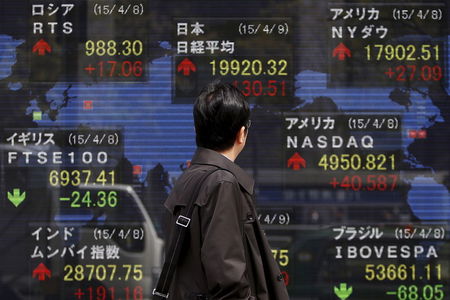
Why are Asia stocks rising on Alphabet’s AI spending boost?
Asian equities are moving higher because Alphabet’s signal that it will keep spending aggressively on artificial intelligence reinforces the idea that the global tech investment cycle is still intact. For investors, that matters because AI capex supports demand not only for software and semiconductors, but also for power infrastructure, data-center equipment, memory chips, cooling systems, and industrial metals tied to electrification.
The market reaction also reflects a broader reading of corporate behavior: when a megacap firm with massive free cash flow continues to raise AI outlays, traders infer that competition in the sector remains intense and that monetization is still strong enough to justify spending. That supports sentiment across Asia’s technology-heavy markets, especially in chipmaking hubs such as Taiwan, South Korea, and parts of Japan.
Still, the move is not purely about one company. It fits a larger theme in which investors continue to favor growth assets when earnings visibility is improving and rate-cut expectations remain alive. In that environment, Asian stocks can outperform, particularly when U.S. tech leadership spills over into regional suppliers and manufacturing names.
- Positive spillover: chip equipment, memory, server, and component suppliers benefit from AI capex
- Sentiment boost: continued spending suggests AI demand is not slowing sharply
- Macro support: easing financial conditions can improve appetite for risk assets
How does an AI spending surge affect commodities and industrial markets?
AI investment is not just an equity story; it has real implications for commodities and energy demand. Data centers require substantial electricity, backup power systems, cooling infrastructure, and construction materials, which can lift demand for copper, aluminum, natural gas, and even specialized metals used in wiring and electronics.
Over time, the AI buildout can become a structural tailwind for power markets. Every incremental data center increases demand for grid capacity and reliable baseload energy, which is why power producers, utility equipment makers, and industrial suppliers often benefit alongside chipmakers. In commodity terms, that creates a link between digital growth and physical resource demand.
However, the relationship is uneven. The near-term impact on crude oil is indirect, while the strongest commodity beneficiaries are usually metals and electricity-related inputs. That said, broader risk-on sentiment driven by AI spending can still support the whole complex, especially when investors rotate into cyclical names across Asia.
- Copper: wiring, transmission, and grid upgrades create structural demand
- Aluminum: data-center construction and power systems use more lightweight industrial metals
- Gas and power: higher electricity load benefits generators and fuel suppliers
- Semiconductor materials: advanced chips require a more complex supply chain
Why does the oil rally cap gains in Asian equities?
Rising oil prices can quickly limit gains in stock markets because they act like a hidden tax on households, companies, and policymakers. When crude rallies, transport costs, manufacturing input costs, and inflation expectations all move higher, which can reduce the odds of aggressive central bank easing and pressure consumer-oriented sectors.
For Asia in particular, the impact is amplified because many economies are large energy importers. Higher oil prices worsen trade balances for countries that rely on imported crude and refined products, and they can weaken corporate margins in sectors such as airlines, logistics, chemicals, and heavy industry. Even when technology shares are strong, a jump in oil often narrows the breadth of a market rally.
The oil move also matters because it can revive inflation concerns at a time when investors may be hoping for smoother disinflation. If energy inflation proves sticky, bond yields can remain elevated, valuations can come under pressure, and the market’s preference for long-duration growth assets may be tested.
- Inflation risk: higher fuel costs can slow the pace of disinflation
- Margin pressure: transport, airline, and industrial sectors face higher input costs
- Policy impact: central banks may have less room to cut rates
What does this mean for traders watching Asia, oil, and AI?
Traders should view the session as a tug of war between two powerful macro forces: AI-led optimism and energy-driven caution. The first is boosting growth-sensitive equities, especially technology and semiconductor names; the second is keeping a lid on broader upside by raising inflation fears and weakening the case for a full risk rally.
In practical terms, this favors a selective approach rather than chasing index-level strength. Momentum may remain concentrated in AI beneficiaries, while cyclical and consumer sectors stay vulnerable if oil keeps climbing. Commodity traders, meanwhile, may see the oil rally as a signal that the inflation trade is not fully dead, even if the broader narrative has shifted toward innovation and capex growth.
Investors should also watch whether the oil move is being driven by supply disruptions, geopolitical risk, or simple positioning. A supply-led rally tends to be stickier and more inflationary, whereas a short-covering move can fade quickly. The distinction matters because only the former would materially reshape expectations for rates, earnings, and cross-asset performance.
- Best positioned: chipmakers, equipment suppliers, utilities, and power infrastructure names
- Most exposed: airlines, transport, chemicals, consumer sectors, and oil-importing economies
- Key variable: whether crude’s rally reflects durable supply tightness or temporary positioning
How should investors think about the broader market setup?
The current setup suggests markets are balancing a constructive earnings and AI-capex story against a more challenging energy backdrop. As long as corporate spending on AI remains strong, Asian equities can continue to attract buyers on dips, especially in technology-rich markets with direct exposure to the semiconductor cycle.
But oil strength is a reminder that the macro environment is still fragile. If energy prices keep rising, the market may have to price in stickier inflation, slower policy easing, and more uneven sector leadership. That would likely preserve relative strength in quality growth and infrastructure themes while limiting the upside for the broader index.
For retail investors, the message is clear: this is not a simple risk-on rally. It is a cross-current market where AI enthusiasm supports growth assets, but crude oil remains the discipline mechanism that keeps the rest of the market from running too far ahead.
Bottom Line
Alphabet’s increased AI spending is a meaningful tailwind for Asian technology shares and related industrial suppliers, reinforcing the idea that the global AI capex cycle is still expanding. But the oil rally is a serious counterweight because it threatens margins, inflation trends, and the breadth of the equity rebound.
For traders, the key question is whether AI-driven optimism can outrun energy-led headwinds. If crude stays firm, gains may remain selective rather than broad-based, with tech and infrastructure outperforming while energy-sensitive sectors lag.