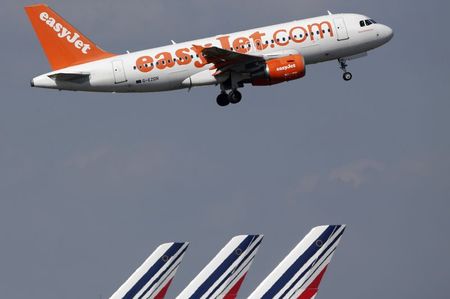
Apollo’s reported $7.7 billion bid for easyJet, topping a rival proposal from Castlelake, puts one of Europe’s best-known low-cost carriers at the center of a potentially defining travel-sector transaction. While the headline is primarily an equity and credit story, it also carries meaningful implications for sterling sentiment, UK assets, European airline valuations and the way investors price consumer travel demand in a higher-rate world.
For currency traders, the immediate foreign exchange impact is likely to be modest compared with central bank decisions, inflation prints or jobs data. But large cross-border acquisitions can still matter at the margin because they create real-money flows, shift perceptions of UK asset attractiveness and influence sector-level risk appetite. A $7.7 billion transaction is large enough to be noticed, especially if financing requires conversion into pounds and if other foreign buyers begin reassessing listed UK companies as takeover targets.
What is Apollo’s $7.7 billion bid for easyJet?
Apollo’s bid is a proposed takeover offer valuing easyJet at about $7.7 billion, reportedly ahead of a competing approach from Castlelake. At a GBP/USD rate near 1.35, that implies an approximate value of £5.7 billion, though the sterling value moves with the exchange rate.
easyJet is one of Europe’s largest budget airlines, with a major UK presence and a dense short-haul network across the continent. A takeover bid of this size would signal that private capital sees value in airline assets despite volatile fuel prices, cyclical demand and heavy capital requirements. For private equity and alternative asset managers, the appeal is clear: airlines with strong brands, valuable airport slots and operational restructuring potential can generate significant upside if bought at the right point in the cycle.
The competitive element matters. Apollo topping Castlelake suggests the asset is not simply being opportunistically targeted during a weak patch; it may be viewed as strategically attractive by multiple financial buyers. That can reprice investor expectations for other European travel names, particularly carriers with strong balance sheets, scarce airport access or undervalued listed shares.
Why does the easyJet takeover bid matter for forex traders?
The bid matters for forex traders because a large acquisition of a UK-listed company can create sterling demand if dollar-funded capital is converted into pounds. The direct currency effect is usually temporary, but the broader signal can support GBP if investors view the UK market as undervalued and attractive to foreign buyers.
The foreign exchange channel has three layers. First, there is the transaction-flow channel. If Apollo funds part of the deal in dollars and needs to settle equity consideration in sterling, banks may need to buy pounds against dollars, depending on hedging and deal structure. For a $7.7 billion headline value, the gross number is meaningful, though the actual spot-market impact may be spread across time and partly hedged through forwards and options.
Second, there is the portfolio-signaling channel. UK equities have often traded at valuation discounts to US peers, reflecting slower domestic growth, political uncertainty in prior years and sector composition. High-profile bids can remind global investors that overseas capital may step in where public markets assign low multiples. That can improve sentiment toward UK assets and provide a mild tailwind to GBP, particularly versus lower-yielding or risk-sensitive currencies.
Third, there is the sector-risk channel. Airlines are sensitive to consumer confidence, oil prices and financing costs. If investors interpret the easyJet bid as evidence that travel demand remains resilient, European equities could benefit. In risk-on conditions, sterling and the euro often perform better than safe-haven currencies such as the Swiss franc and Japanese yen, although the relationship is far from mechanical.
How does a cross-border takeover affect GBP/USD and EUR/GBP?
A cross-border takeover can affect GBP/USD when foreign buyers need sterling to complete a UK acquisition. It can also influence EUR/GBP because easyJet earns revenue across Europe while its listing, investor base and reporting sensitivity are closely tied to the UK.
For GBP/USD, the cleanest interpretation is that deal-related flows can add near-term support, but they rarely override macro forces. If the Bank of England is cutting rates faster than the Federal Reserve, or if US yields rise sharply, a single acquisition is unlikely to reverse sterling weakness. Conversely, in a stable macro backdrop, a major inbound bid can contribute to upside pressure by adding real demand and improving the narrative around UK investability.
For EUR/GBP, the effect is more nuanced. easyJet’s operations are pan-European, meaning revenue exposure is not purely sterling. The airline sells tickets in multiple currencies, pays staff and airport fees in local markets, and faces fuel and aircraft-related costs that are often linked to the US dollar. A takeover that improves balance-sheet confidence could be seen as positive for European travel broadly, but the currency pair will still be driven mainly by relative UK and eurozone rate expectations.
One practical point: acquisition announcements often create more visible moves in the target company’s shares than in FX. Currency traders should watch whether the bid sparks a broader wave of UK deal activity. A single transaction is a footnote; a cluster of deals can become a theme.
What does the bid say about European airline valuations?
The bid suggests private capital may believe European airlines are undervalued relative to their normalized earnings power and strategic assets. Low-cost carriers can be especially attractive because they often have scalable networks, strong cost discipline and recognizable consumer brands.
Airline valuations have long been discounted for good reasons. Fuel prices can swing sharply. Labor negotiations can pressure margins. Aircraft delivery delays can disrupt growth plans. Economic slowdowns can hurt discretionary travel. In addition, airlines require constant capital investment, and leverage can become dangerous when demand falls unexpectedly.
Yet the industry has also changed. Capacity discipline after the pandemic, stronger ancillary revenue models, dynamic pricing and structurally high demand for leisure travel have improved the economics of many carriers. easyJet’s brand recognition, airport slot portfolio and exposure to both UK outbound travel and European leisure routes could make it more valuable to a private buyer than to public markets focused on quarterly volatility.
Apollo’s willingness to top a rival bid may also indicate confidence that cost savings, fleet optimization or capital-structure changes can unlock value. For listed peers, the read-through could be positive: if easyJet deserves a higher strategic value, investors may revisit multiples for competitors and travel infrastructure companies, including airports, booking platforms and aircraft lessors.
What are the main risks to the easyJet deal?
The main risks are financing conditions, regulatory scrutiny, shareholder resistance and airline-cycle volatility. A $7.7 billion bid is significant, but execution depends on whether funding remains attractive and whether investors believe the offer adequately reflects easyJet’s future value.
Financing is central. Private equity deals are more sensitive to interest rates than strategic corporate mergers because they often rely on debt. If credit spreads widen or risk appetite fades, the cost of financing can rise quickly. Airlines also have cyclical cash flows, which can make lenders more cautious than they would be for infrastructure-like assets.
Regulatory issues may be manageable but cannot be ignored. A financial buyer is less likely than an airline competitor to trigger major route-overlap concerns, but authorities may still review ownership, competition, labor and national-interest implications. Aviation is politically visible, especially in the UK and Europe, where connectivity, employment and airport access are sensitive issues.
Shareholder approval is another hurdle. If investors believe easyJet is entering a stronger earnings phase, they may demand a higher price. The existence of a competing bidder can strengthen the target’s negotiating position. That means the $7.7 billion number may not be the final word if a formal process develops.
- For easyJet shares: the bid can support a takeover premium, but upside depends on whether a binding offer emerges.
- For GBP: potential support comes from acquisition flows and improved UK asset sentiment, not from a change in macro fundamentals.
- For airline peers: the deal could lift valuation benchmarks across European travel stocks.
- For credit markets: financing terms will reveal how comfortable lenders are with airline cash-flow risk.
What should traders watch next?
Traders should watch for confirmation of a formal offer, the financing mix, shareholder response and any indication of rival bids. In FX, the key question is whether the transaction becomes part of a broader pattern of overseas capital buying UK assets.
For sterling, the most important market signals will come from GBP/USD and EUR/GBP price action around deal milestones. If GBP strengthens while UK yields are stable and risk appetite is broadly constructive, takeover-flow speculation may be contributing. If sterling fails to respond, that would suggest macro drivers remain dominant.
Equity traders should monitor the spread between easyJet’s share price and the implied offer value. A narrow spread usually signals confidence that a deal will close; a wide spread suggests doubts about financing, approvals or bid credibility. Airline peers may also move if investors price a higher probability of consolidation or further private-equity interest.
For macro investors, the larger message is that capital is still hunting for value in European consumer and travel assets. If rates are stabilizing and travel demand remains resilient, financial buyers may become more aggressive. That would matter not only for stocks but also for currencies tied to inward investment flows.
Bottom Line
Apollo’s $7.7 billion bid for easyJet is primarily a major airline and M&A story, but it has a clear secondary relevance for sterling and UK market sentiment. The direct FX impact is likely limited unless deal-related flows are large and unhedged, yet the bid reinforces the idea that global capital sees value in UK-listed assets.
For traders, the opportunity is not to overstate the currency effect, but to track whether this becomes a broader takeover theme. If more inbound bids follow, the narrative around GBP could shift from macro caution to undervalued-asset support.