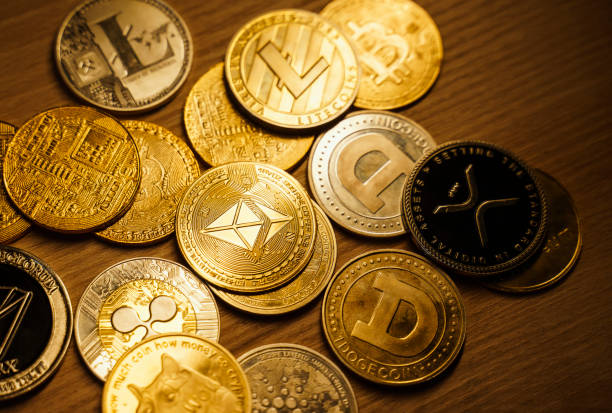
Altseason Call Re-enters the Market Conversation
Altseason speculation is back on the table after a widely followed crypto trader, Ash Crypto, highlighted a bullish window extending into early July. The timing matters because the market has spent weeks in a choppy, uneven phase: Bitcoin has held near the $65,000 area, Ethereum has hovered around $1,765, and many altcoins have produced sharp but inconsistent rebounds. That is not yet an altseason. It is a market searching for confirmation.
For educated retail investors, the key question is not whether altcoins can rally for a few days. They often do. The more important question is whether capital is rotating away from Bitcoin leadership and into higher-beta assets in a durable way. A true altseason is not defined by isolated pumps in meme coins or a single strong Ethereum candle. It is defined by broad participation, improving liquidity, rising risk appetite, and sustained outperformance versus Bitcoin.
What Makes Early July Important?
Crypto markets often move in compressed windows. A multi-week period of sideways Bitcoin trading can create the setup for a sudden rotation, especially if leveraged positioning resets and volatility compresses. Early July is also psychologically important because it follows the end-of-quarter positioning cycle, when funds, market makers, and larger traders often rebalance exposure. If Bitcoin remains stable rather than breaking down, altcoins can benefit from traders searching for assets with greater upside convexity.
The bullish case is straightforward: Bitcoin has already attracted the safest crypto bid, while altcoins have lagged substantially. If BTC consolidates above key support and Ethereum starts to outperform, traders may look for catch-up trades across Solana, XRP, BNB ecosystem tokens, AI coins, gaming assets, real-world asset tokens, and meme sectors. In past cycles, altseason often began after Bitcoin established a range rather than during a vertical Bitcoin move.
The Three Signals That Need to Confirm
Investors should avoid treating any calendar window as a guarantee. Dates can focus attention, but price action confirms the thesis. The market needs several signals to align before an altseason call becomes more than a social media narrative.
- Ethereum strength: ETH must outperform BTC on a relative basis. A rising ETH/BTC pair is one of the clearest signs that capital is moving beyond the Bitcoin trade.
- Bitcoin dominance weakness: Bitcoin dominance needs to stall or trend lower. If BTC dominance keeps climbing, most altcoin rallies are likely to be short-lived and selective.
- Broad market participation: Gains must extend beyond the largest names. A real altseason shows strength across mid-caps, sector tokens, and speculative leaders, not just Ethereum and Solana.
These signals matter because altcoins are structurally more fragile than Bitcoin. They trade with thinner liquidity, wider spreads, and heavier retail participation. That makes them powerful during risk-on rotations but vulnerable when market confidence fades.
Bitcoin’s Role: Stability Is More Bullish Than Euphoria
Ironically, the best environment for altcoins is not always a surging Bitcoin. When BTC rises too quickly, capital concentrates in Bitcoin because it offers the cleanest momentum trade. When BTC falls sharply, investors de-risk and altcoins usually fall harder. The sweet spot is a stable Bitcoin trading in a constructive range, ideally with declining volatility and no major breakdown in support.
With Bitcoin near $65,000, the market is watching whether buyers defend higher lows. If BTC can hold its range while funding rates remain controlled, traders may become more willing to rotate into riskier crypto assets. But if Bitcoin loses support aggressively, altcoin season calls will likely be postponed. In that scenario, liquidity will retreat to stablecoins and Bitcoin, leaving smaller tokens exposed.
Ethereum Is the Gatekeeper
Ethereum remains the most important confirmation asset for any altseason thesis. At roughly $1,765, ETH has not yet delivered the kind of decisive leadership that typically ignites broad altcoin confidence. Ethereum does not need to outperform every token, but it does need to show that institutional and retail capital are willing to move out on the risk curve.
A convincing Ethereum breakout would likely improve sentiment across DeFi, liquid staking, layer-2 networks, and Ethereum beta plays. Conversely, if ETH continues to lag Bitcoin, the market may remain fragmented, with only isolated narratives attracting flows. Traders should watch ETH/BTC more closely than ETH/USD. Dollar gains can be misleading if Bitcoin is rising faster.
Sector Rotation: Where Altseason Usually Starts
Altseason rarely lifts every asset at once. It usually begins with the most liquid large-cap alternatives, then spreads into sector leaders, and finally reaches speculative microcaps if enthusiasm becomes extreme. The first wave often includes Ethereum, Solana, and major exchange-linked or payment tokens. The second wave tends to favor narratives with active user demand or strong market attention, such as AI, tokenized real-world assets, DePIN, gaming, and meme coins.
Retail investors should distinguish between narrative strength and token quality. A weak project can rally if it sits in the right narrative, while a fundamentally stronger asset can underperform if it lacks attention. That is why altseason investing requires both market awareness and risk controls. In euphoric phases, liquidity can make almost everything look investable. When conditions reverse, dispersion returns quickly.
Risks Behind the Altseason Narrative
The main risk is that the market is mistaking a relief bounce for a structural rotation. Many altcoins are still far below prior cycle highs, and a 20% or 30% rebound after steep losses does not automatically indicate a new trend. Another risk is leverage. If traders crowd into the early-July thesis with aggressive long positions, even a modest Bitcoin pullback could trigger liquidations across altcoin perpetual markets.
Macro conditions also matter. Crypto remains sensitive to liquidity expectations, dollar strength, rates, and broader risk appetite. If global markets move defensive, altcoins will likely struggle regardless of internal crypto narratives. Investors should also remember that token unlocks, ecosystem-specific issues, and regulatory headlines can create asset-level risks even during bullish market phases.
How Retail Investors Can Approach the Setup
A practical approach is to treat the early-July window as a watchlist catalyst, not a certainty. Investors can define confirmation levels in advance instead of chasing green candles. That may include monitoring ETH/BTC, Bitcoin dominance, total crypto market cap excluding BTC and ETH, and volume expansion across top altcoins. If those metrics improve together, the probability of a broader rotation increases.
Position sizing is critical. Altcoins can outperform dramatically, but they can also erase gains in a single session. Scaling into strength after confirmation is often safer than trying to perfectly catch the bottom. Traders should also separate core positions from speculative trades. High-conviction large caps may deserve different risk treatment than meme coins or low-float tokens.
Key Takeaway
The return of altseason talk into early July is meaningful because the market is at a potential rotation point: Bitcoin is stable enough to give risk assets breathing room, while altcoins remain beaten down enough to attract catch-up bids. But a real altseason still needs confirmation. Watch Ethereum leadership, Bitcoin dominance, and breadth across sectors. If those align, early July could mark the start of a stronger altcoin phase. If they fail, the move may remain another short-lived bounce in a still Bitcoin-led market.