The AI Bull Market Meets Its First Real Stress Test
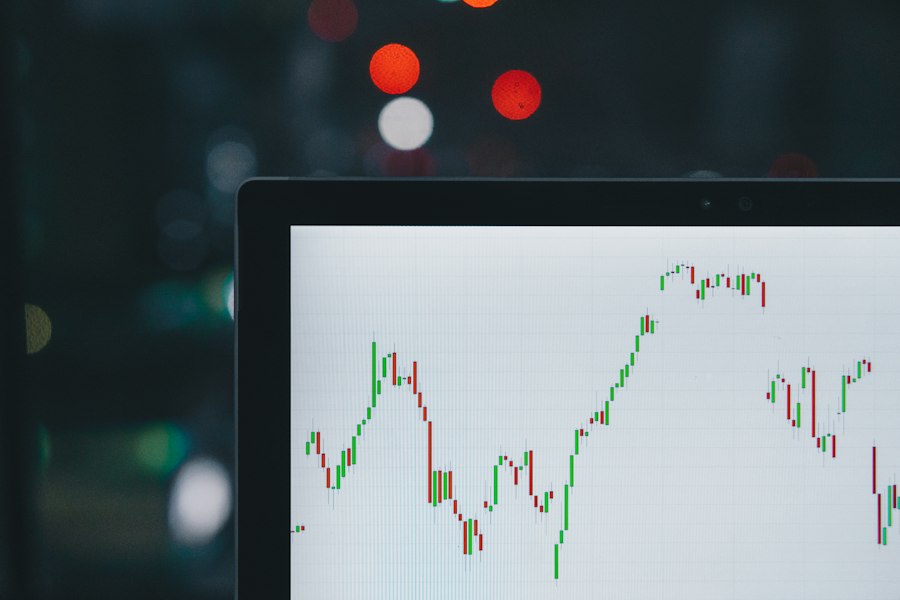
The global equity market is being hit by a sharp risk-off move centered on the most crowded trade of the past several years: artificial intelligence. Wall Street’s leading growth stocks are under pressure as investors reassess valuations, earnings durability, and the scale of capital spending required to keep the AI boom alive. The shock has not stayed in the United States. South Korea’s equity market, one of the world’s most direct proxies for the semiconductor cycle, has plunged roughly 10%, signaling that this is not merely a U.S. tech correction but a cross-market de-risking event.
For months, AI enthusiasm helped investors look through high interest rates, geopolitical risk, and uneven global growth. The logic was simple: if AI reshapes productivity, cloud computing, software, chip demand, and corporate margins, then today’s expensive valuations could be justified by tomorrow’s earnings. That logic is now being tested. When a market narrative becomes too dominant, even a small disappointment can force a large repricing.
Why the AI Sell-Off Is Hitting So Hard
The sell-off appears to be driven less by a single data point and more by a broad shift in positioning. Investors have been heavily concentrated in AI winners, including chipmakers, cloud infrastructure providers, equipment suppliers, power-related plays, and select software names. That concentration created strong momentum on the way up, but it also increases fragility when sentiment turns.
There are three pressure points behind the reversal. First, valuations had expanded faster than earnings for many AI-linked companies. In market terms, that means investors were paying more for each dollar of expected future profit. When confidence is high, that premium can rise for a long time. When confidence cracks, the same premium becomes a source of downside.
Second, the market is beginning to question the timing of AI monetization. Hyperscale cloud companies and enterprises are spending aggressively on chips, data centers, networking, and energy capacity. But investors increasingly want evidence that this spending will produce cash flows soon enough to justify the outlays. If AI remains a capital expenditure boom without a clear return profile, the trade becomes vulnerable.
Third, crowded trades tend to become mechanical during sell-offs. Portfolio managers reduce exposure to their biggest winners, leveraged funds cut risk, options dealers hedge downside, and quantitative strategies respond to volatility. The result can be a feedback loop where selling triggers more selling, especially in stocks that had become consensus longs.
South Korea’s 10% Drop Is a Global Warning Signal
South Korea matters because it sits at the center of the global technology supply chain. Its market is highly exposed to memory semiconductors, advanced electronics, displays, batteries, and exporters tied to global capex cycles. A 10% decline is not just a local event; it is a sign that investors are repricing the entire AI hardware chain.
Korean chip giants have benefited from demand for high-bandwidth memory, data center servers, and advanced packaging. These segments are central to AI training and inference workloads. If investors begin to fear that AI infrastructure demand is peaking, being delayed, or becoming less profitable, South Korea can become one of the first markets to reflect that stress.
The currency channel is also important. In risk-off environments, emerging and export-oriented markets often face additional pressure if the U.S. dollar strengthens. A weaker won can help exporters over time, but in the short run it may amplify foreign outflows, raise concerns about imported inflation, and tighten financial conditions. When equities fall sharply and the currency weakens, global investors often reduce exposure first and ask questions later.
What This Means for Wall Street
For U.S. markets, the central question is whether this is a normal correction inside a secular AI bull market or the start of a broader rotation away from mega-cap technology. The distinction matters. A 5% to 10% correction in high-quality leaders can reset expectations and create healthier market breadth. But a deeper unwind in AI names could pressure the broader indexes because of their unusually large index weights.
The S&P 500 and Nasdaq have become increasingly dependent on a narrow group of mega-cap technology and semiconductor stocks. When those leaders rise, they can mask weakness elsewhere. When they fall together, diversification inside passive index funds becomes less effective than many investors assume. The market can look broad on paper while behaving like a concentrated bet in practice.
Investors should watch whether selling spreads into economically sensitive sectors such as industrials, financials, consumer discretionary, and small caps. If the damage remains contained to expensive AI beneficiaries, the market may be undergoing a valuation reset. If credit spreads widen, volatility spikes, and defensive sectors outperform sharply, the message becomes more serious: investors may be preparing for a broader growth scare.
The Bond Market May Decide the Next Phase
Equity investors should not ignore Treasuries. In a classic risk-off move, government bonds rally as money seeks safety, pushing yields lower. That can help long-duration technology stocks because lower yields increase the present value of future earnings. But if yields remain elevated despite falling equities, the market has a bigger problem. It would suggest that investors are worried about inflation, fiscal stress, or central bank constraints rather than simply growth.
The ideal stabilization pattern for bulls would be lower bond yields, calmer currency markets, and signs that forced selling is fading. The more dangerous pattern would be rising real yields, a stronger dollar, falling Asian equities, and widening corporate credit spreads. That combination would tighten financial conditions and threaten earnings multiples across the market, not just in AI.
How Retail Investors Should Think About the Sell-Off
For educated retail investors, the biggest mistake is to treat every AI decline as either a once-in-a-generation buying opportunity or proof that the entire theme is finished. The reality is more nuanced. AI is likely to remain a major technological and investment theme, but even transformative themes can suffer brutal drawdowns when expectations get too high.
A disciplined approach should focus on balance sheets, free cash flow, competitive position, and realistic earnings assumptions. Companies selling mission-critical infrastructure with strong pricing power deserve a different valuation than speculative firms with AI branding but limited revenue visibility. Investors should separate AI beneficiaries from AI narratives.
- Watch earnings revisions: If analysts continue raising profit estimates, the sell-off may be valuation-driven. If estimates fall, the risk is more fundamental.
- Monitor semiconductor orders: Memory pricing, server demand, and data center capex are key indicators for Korea and the broader AI chain.
- Track market breadth: A healthy market should eventually see buyers rotate into quality names beyond mega-cap tech.
- Respect volatility: Sharp index moves often produce false rebounds before a durable bottom forms.
- Avoid leverage: In crowded unwinds, price moves can exceed what fundamentals alone would justify.
Could This Become a Buying Opportunity?
Yes, but timing matters. The best long-term opportunities often appear during panic, yet not every dip is immediately investable. Investors should look for signs of capitulation, such as extreme volume, indiscriminate selling, volatility spikes, and stabilization in the highest-quality leaders. A durable bottom often requires both price adjustment and narrative repair.
For AI, that narrative repair could come from strong earnings, clearer return on investment from cloud spending, resilient chip demand, or guidance showing that enterprise adoption is accelerating. Until then, the market may shift from rewarding revenue potential to demanding proof of profitability. That shift usually favors established leaders over speculative second-tier names.
Key Takeaway
The AI-led sell-off on Wall Street and South Korea’s 10% market plunge mark a significant change in global risk appetite. This is not simply a bad day for technology stocks; it is a stress test for one of the most important investment themes in the world. The AI revolution may remain intact, but the market is repricing how much investors should pay for it, how quickly profits will arrive, and how much risk is embedded in crowded trades.
For now, caution is warranted. Investors should avoid emotional decisions, focus on quality, and watch the bond market, currencies, credit spreads, and semiconductor demand for confirmation. The bottom line: AI is still a powerful long-term theme, but the easy phase of the trade may be over.